College kids home for the break: chores and house rules
College student home for winter break? Treat them as a temporary adult housemate: a rest window, then two or three jobs they own, agreed by text.

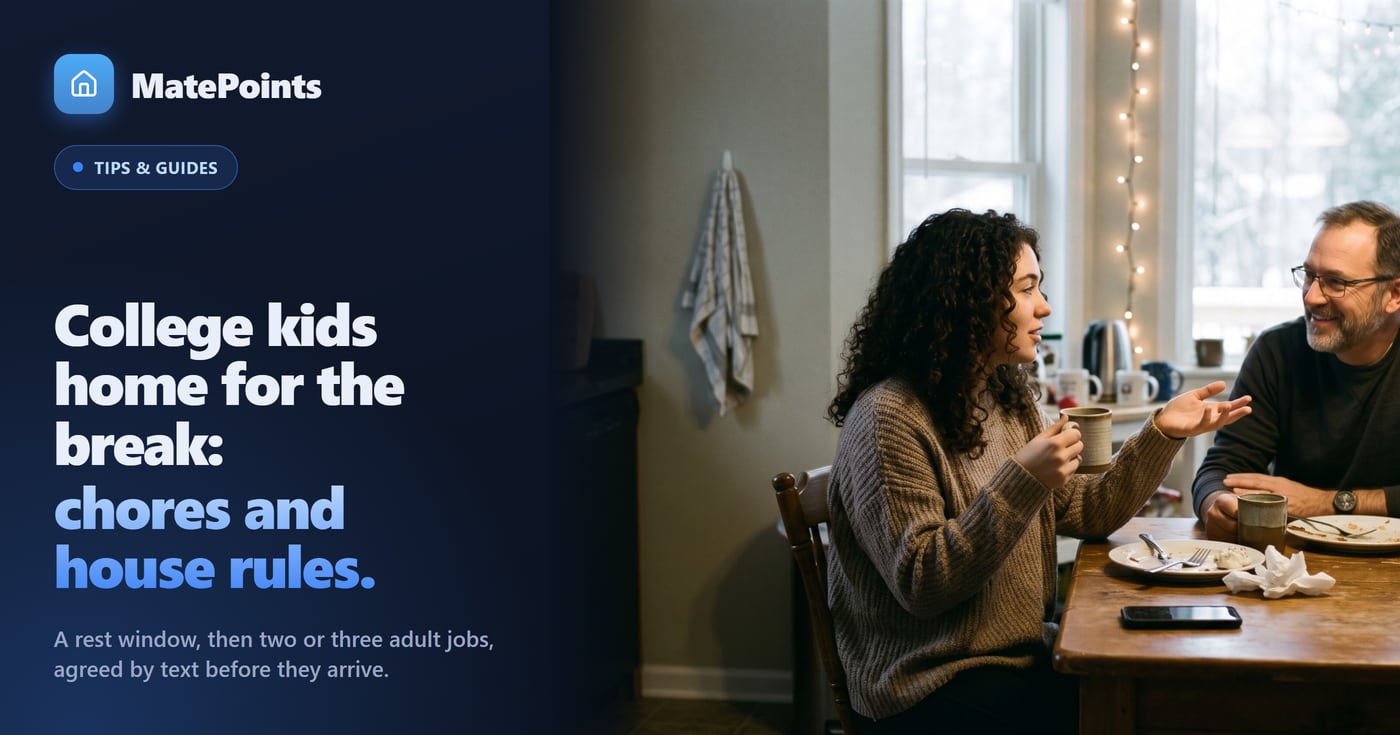
A college student home for winter break is not the child who left in September. For three months they have cooked, cleaned, slept and spent money on their own terms. Then they walk back into a house that still runs on the old rules, and the chores are where it rubs first. This guide treats the returning student as a temporary adult housemate. Agree a short deal by text before they arrive: a few days of rest after exams, then two or three adult jobs they own. Agree it once, then stop asking. End it cleanly when they leave.
Why the first week home goes wrong
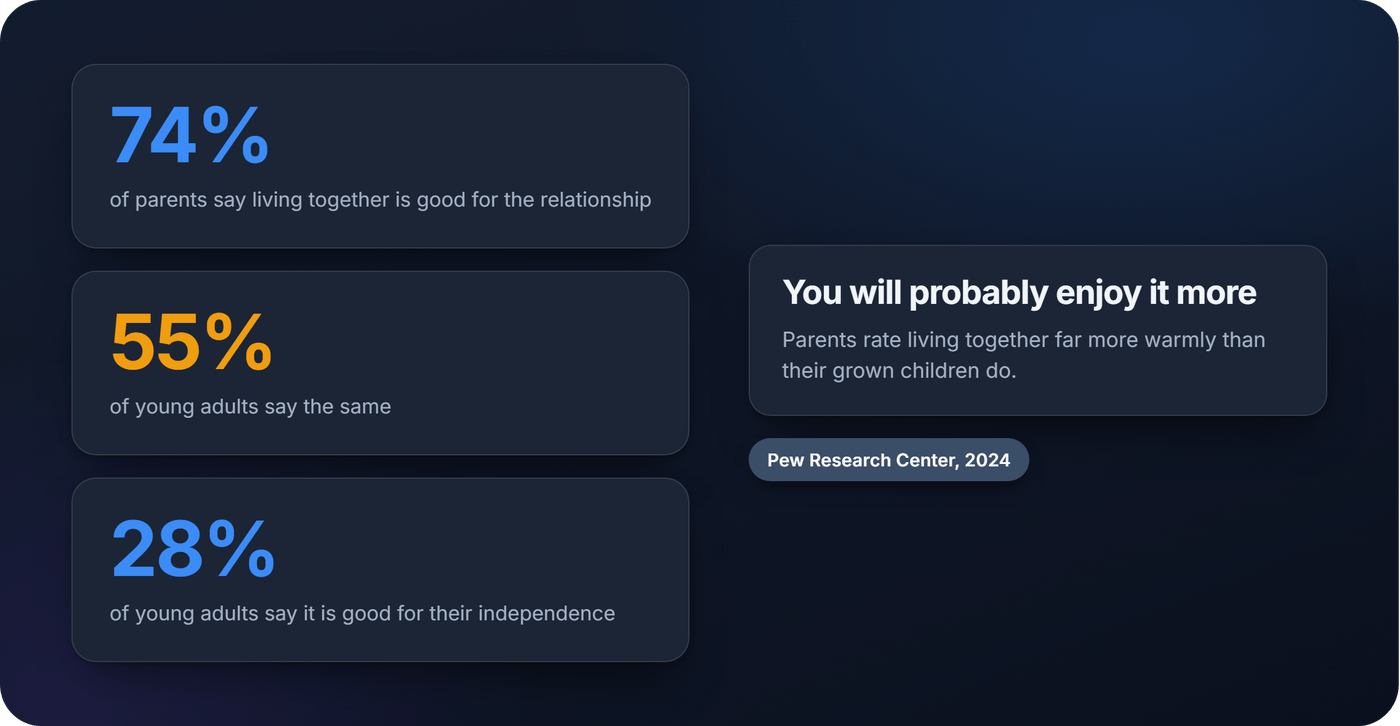
Parents and their grown children do not experience living together the same way. In a 2024 report, the Pew Research Center found that 74% of parents living with a young adult child say it has been positive for their relationship, against 55% of the young adults. Only 28% of the young adults said living at home had been positive for their sense of independence, and 32% said it had been negative. Pew surveyed 18 to 34 year olds who live with a parent, not students home for a month, so read it as a direction rather than a forecast. The direction is clear enough: you are likely to enjoy the arrangement more than they do.
Students see the clash coming too. Writing for the Winona State University wellness blog in 2022, student Makayla Lende warned that "it may take time for you to adjust to the house getting quiet at 9pm instead of your 1am sleeping schedule". Her advice to students was to ask, before they arrive, "what chores are you expected to help with?" Most families never answer that question. They wait for the first pile of dishes to answer it for them.
A temporary housemate, not a returning child
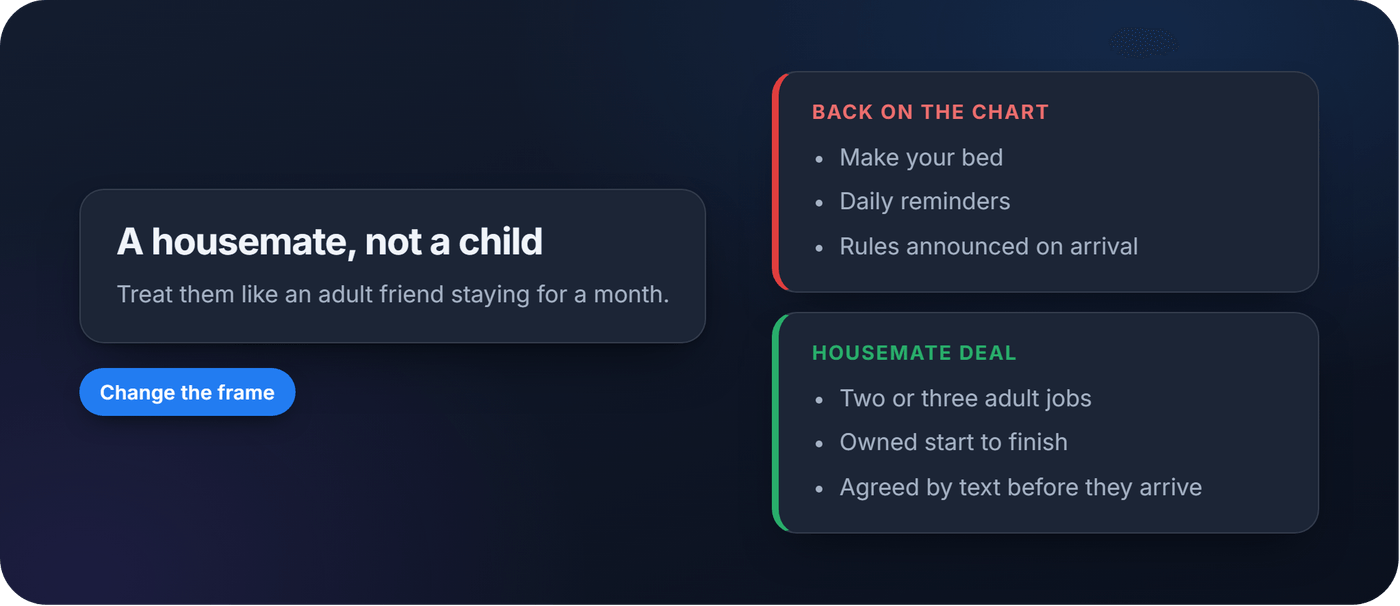
The fix is a change of frame. Do not put your student back on the chore chart they had at fifteen. Treat them the way you would treat an adult friend staying for a month: welcome, fed, and expected to pull their weight in a few clear ways.
That frame changes three things. The jobs are adult jobs, not "make your bed". There are fewer of them, because a housemate owns a share, not a list. And the deal is agreed up front, between adults, instead of announced on arrival.
Agree the deal by text before they arrive
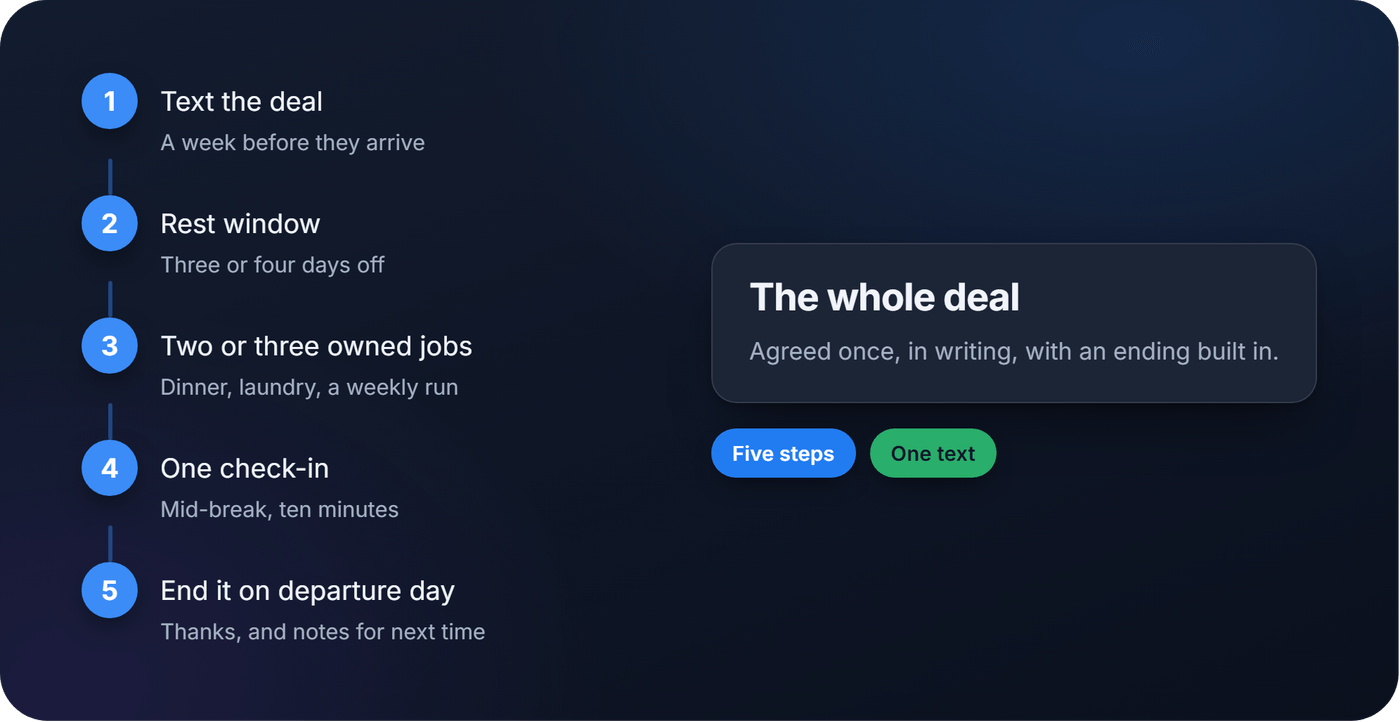
Send the message a week or so before they come home, when nobody is tired or standing in the kitchen. Keep it short, put it in writing, and ask for their input rather than a signature. Something like:
Can't wait to have you home. Take the first few days off, you've earned it. After that, could you take on three things while you're here: cooking dinner one night a week, your own laundry, and the weekly grocery run? Happy to swap any of those for something else. What works for you?
A text does work a kitchen conversation cannot. They can answer when they are ready, they can counter-offer, and both of you can scroll back to it later. It is the same idea as a roommate agreement for chores, scaled down to a few weeks.
Start with a rest window
Many students come home tired. The Chegg Global Student Survey 2025, which asked 11,706 students aged 18 to 21 in 15 countries in October 2024, found that 55% were not sleeping enough and 43% were experiencing academic burnout, as Databoks reported. A few days of sleeping late is not laziness. It is recovery.
So put the rest into the deal. Three or four days with no jobs at all, and a start date for the rest. A rest window you offered is generous. One you were forced into by an argument is a defeat for everyone.
Pick two or three adult jobs they own
"Own" is the important word. An owned job is one they run from start to finish, without being told when. Good candidates:
- One family dinner a week. They choose it, shop for it and cook it. This is the job most likely to become a highlight of the break.
- Their own laundry. In one family described by Kate Harveston for CollegiateParent, the son "took care of managing his washing" and his mother agreed to stop refolding his clean clothes. The second half matters as much as the first.
- One weekly run. The grocery shop, the bins and recycling, or walking the dog. Something the house notices when it does not happen.
Two or three is enough. Their younger brother or sister may be on a fuller daily list, and that is fine. Younger children need structure, which our winter break chores for kids plan covers. A returning adult needs ownership. If your student is still closer to sixteen than twenty, our guide to chores for teenagers by stage is the better fit.

Agree it once. Then stop asking.
Here is where most breaks go wrong. The deal is agreed, and then a parent reminds, checks and nudges every day, which turns an adult arrangement back into a childhood one within a week.
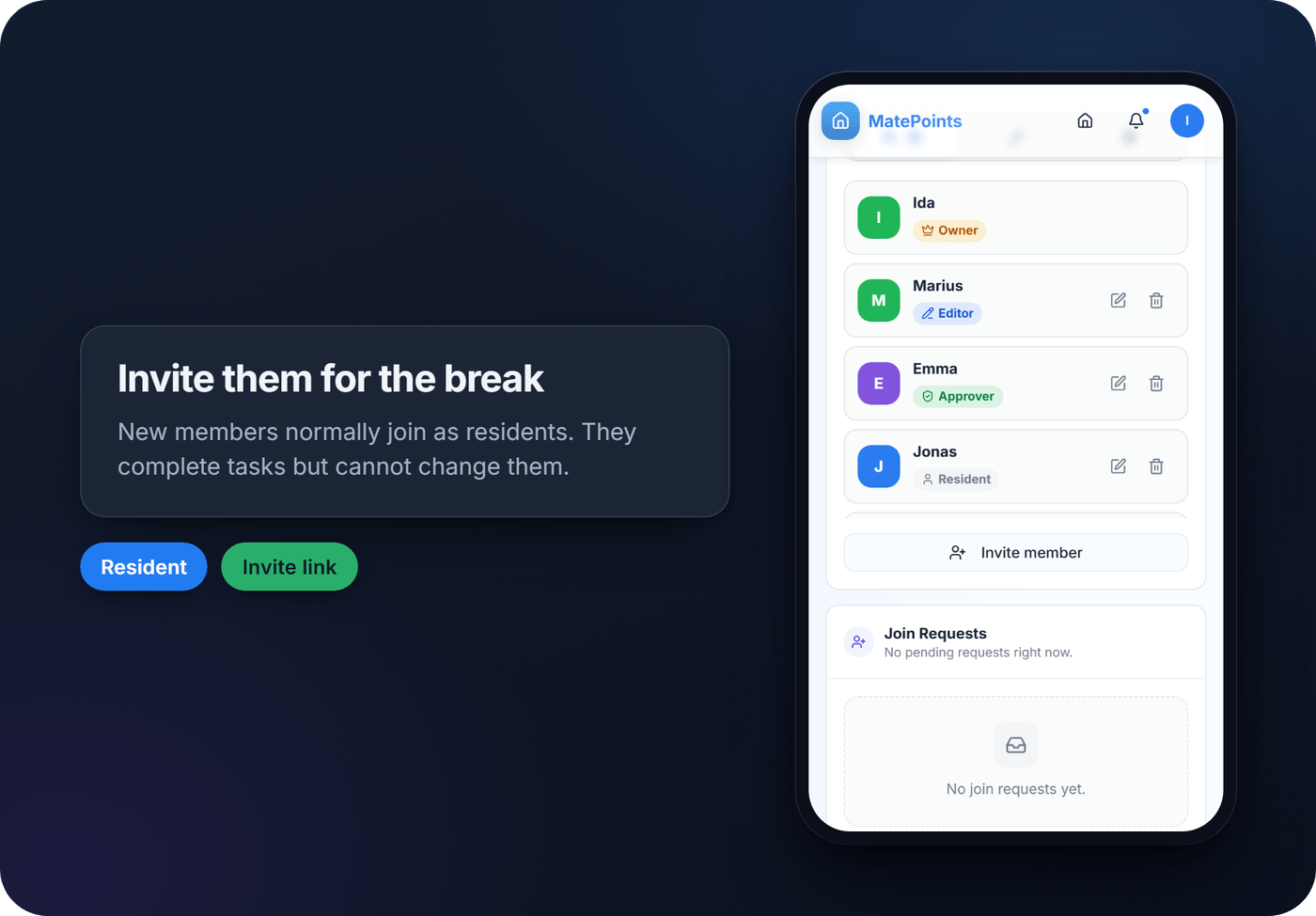
Make the work visible instead of asking about it. If you already use MatePoints, invite your student into the household for the break. New members normally join as residents: they can complete tasks and see the household, but cannot change the tasks or approve anyone's work. Send them the invite link, put their jobs on the list, and let them tick each one off when it is done.
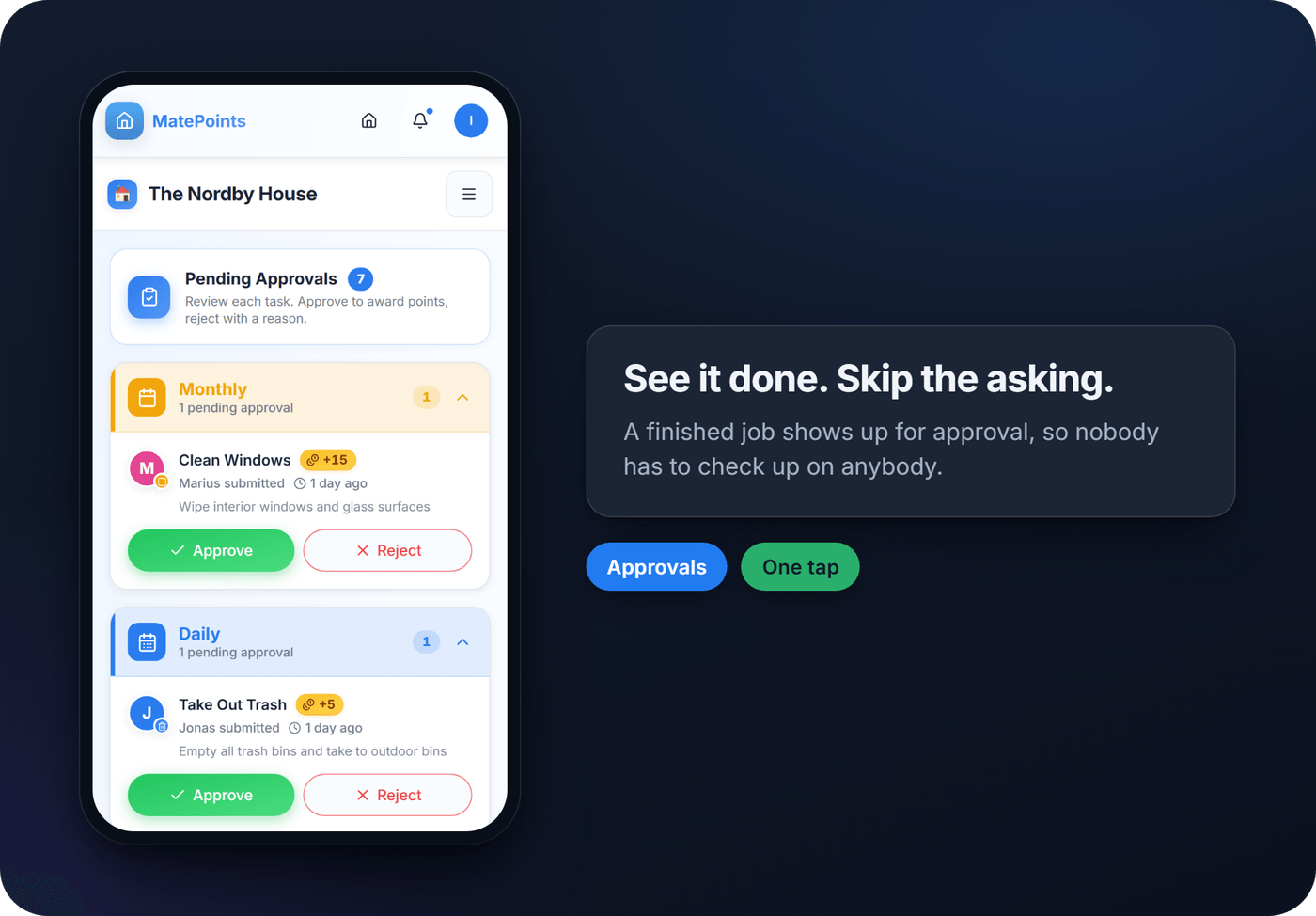
When they finish a job, it is either approved automatically or waits for an owner, editor or approver to approve, depending on the household's settings. Either way, you see that the grocery run happened without asking whether it happened. That one change removes most of the daily friction.
If something is not working, raise it once, mid-break, at a calm moment, and adjust the deal rather than the person. A short family meeting agenda keeps that conversation to ten minutes.
House rules that are not about chores
Chores are rarely the only friction. Late nights and coming home in the early hours are the other classic. Again, the housemate frame helps: you would not give a guest a curfew, but you would ask them not to wake the house. The family in the CollegiateParent piece settled on a simple version: outings past 10 p.m. "required a call or a text". It covers the worry without treating a twenty year old like a fourteen year old.
Put any rule like that in the same pre-arrival message, so the whole deal arrives in one place.
End the deal cleanly on departure day
A deal with no ending drifts into next summer as a grudge. So close it on purpose. On the last day, say thank you for the dinners specifically, not in general. Ask what they would change next time, and write it down.
If you used MatePoints, they can leave the household from Settings with Leave household. Their completed tasks and points stay in its history, and they can rejoin with a new invite when the next break comes round. The arrangement ends, the record of what they did stays, and next time starts from what worked.
A month at home goes best when everyone knows the terms. A few days off, two or three owned jobs, agreed once by text and ended with thanks. If you want a place to keep those jobs, MatePoints is free to start and your student can join from the link you send them.
Sources
- Financial help and independence in young adulthood, in Parents, Young Adult Children and the Transition to Adulthood, Pew Research Center, January 2024
- Preparing to Live at Home Over Winter Break, Makayla Lende, Winona State University Wellness Blog, December 2022
- Global Mental Health Challenges Faced by Students in 2024 (Chegg Global Student Survey 2025), Databoks, July 2025
- Set Fair House Rules While Giving Your Student Space, Kate Harveston, CollegiateParent