Winter break chores for kids: a two-week plan
Winter break chores for kids, planned for the whole break: a short daily set, one project job a week and a finish line that keeps week two going.


Winter break chores for kids work best as a light rhythm for the whole break, not a burst of jobs before the 25th. Most holiday chore lists stop at wrapping paper and table setting. Then the decorations are up, the guests have gone, and there are still ten days of children at home. This plan covers all of it: a short daily set, one bigger project each week, and a finish line the kids can see.
Why the break needs a little structure
School gives a day its shape. Take it away for two weeks and most children drift, which is fine for a few days and less fine for a fortnight.
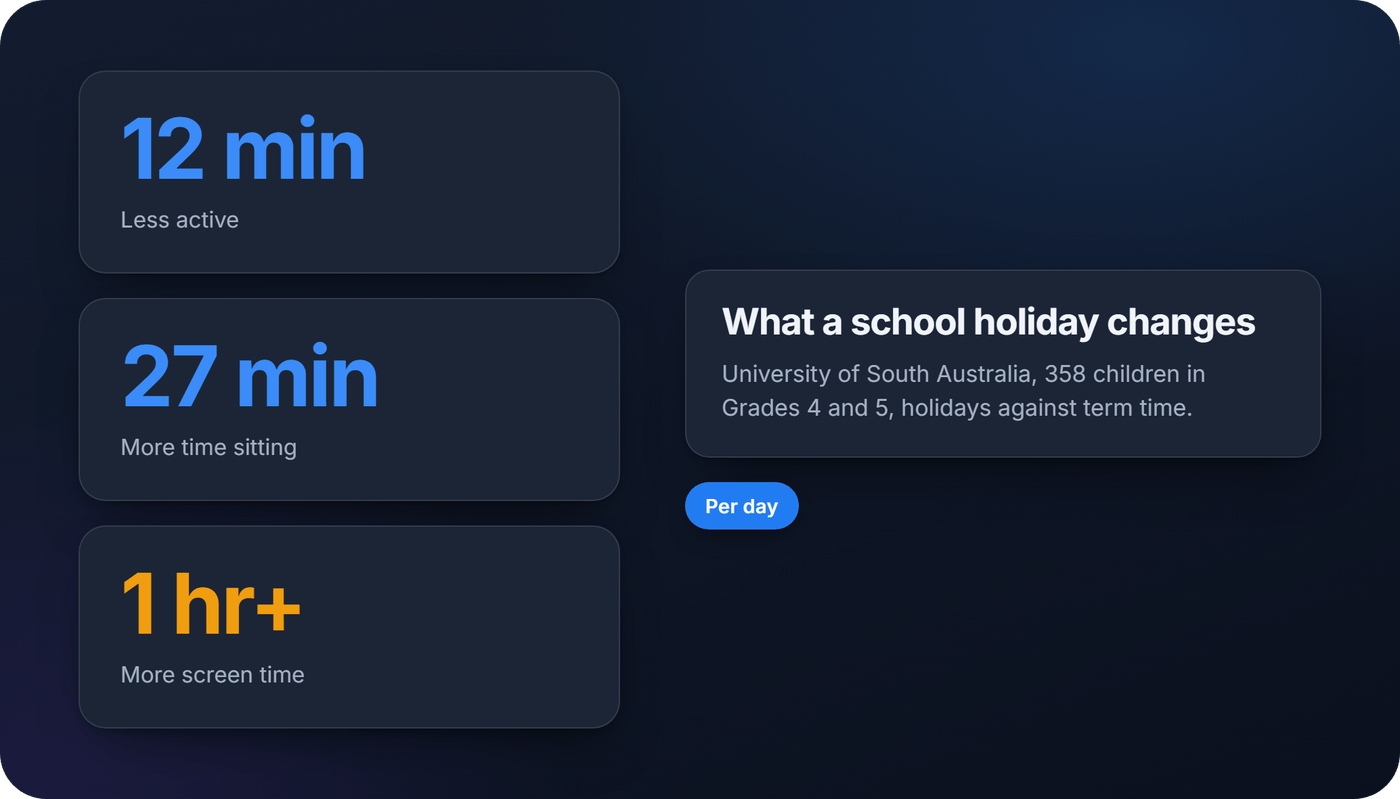
Researchers at the University of South Australia tracked 358 children in Grades 4 and 5 across term time and school holidays. As The Educator reported in 2023, during holidays the children were about 12 minutes a day less active, spent 27 more minutes sitting, and had more than an hour of extra screen time a day. "During school holidays, children are more likely to display unhealthy behaviours," said lead researcher Dr Amanda Watson.
The answer is not a school timetable at home. Psychologist Erlanger A. Turner, writing in Psychology Today in December 2024, recommends "a flexible routine that provides a predictable rhythm without the rigidity of school schedules". He also notes that "maintaining responsibilities, even simple ones, helps children feel a sense of purpose and structure". Chores are the easiest responsibility to keep, because the house needs them done anyway.
The two-week plan at a glance
The plan has three parts, and each one does a different job:
- A short daily set. Two or three small jobs every day, done before screens or at a fixed time. This is the rhythm.
- One project job per week. Something bigger that takes an afternoon. This is what the kids will remember doing.
- A finish line. A clear end, the day before school starts, so the second week has something to aim at.
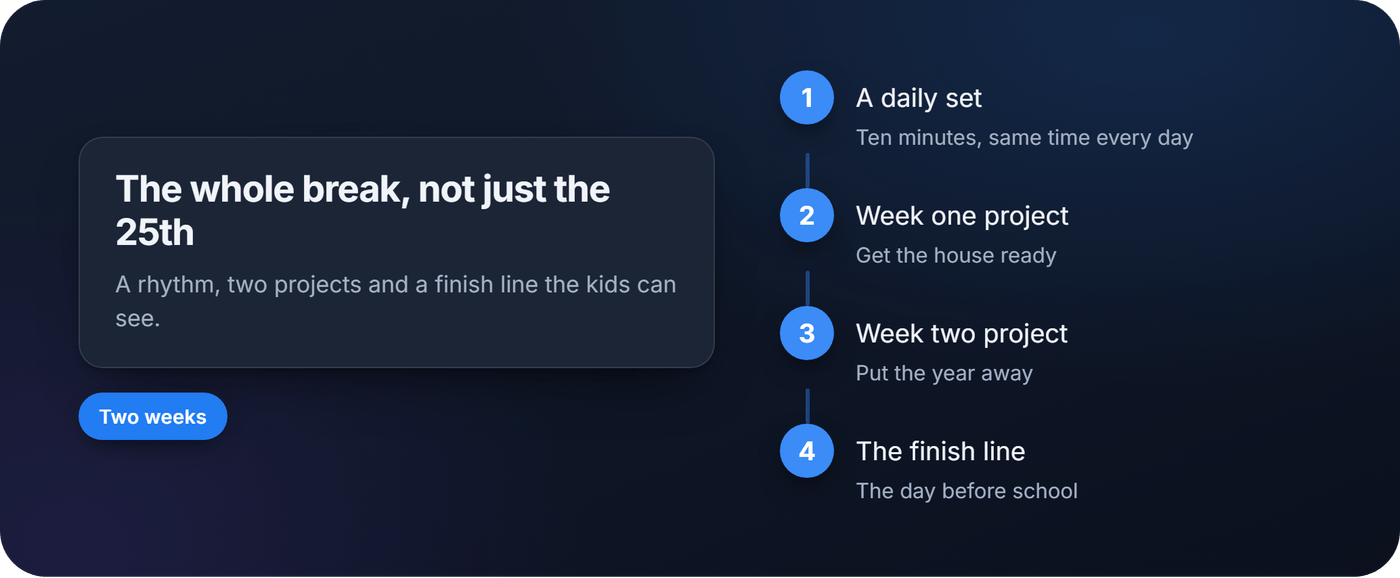
The daily set: ten minutes, same time every day
Keep the daily set small enough that nobody argues about it. Ten minutes is plenty. Tie it to something that already happens every day: after breakfast, or before the first screen of the day. A predictable slot does more than a long list.
Pick jobs that match your child's age. The American Academy of Pediatrics suggests in its age-appropriate chores guide that children aged 5 to 7 can make their bed, set and clear the table and feed a pet. At 8 to 10 they can add vacuuming and helping make dinner. At 11 to 12 they can unload the dishwasher, do laundry and cook a simple meal with supervision. For a fuller ladder, see our guide to age-appropriate chores.
A daily set for a winter break might look like this:
- Make your bed and open the curtains.
- Clear your own breakfast things.
- One five-minute job from the family list: feed the pet, empty the bins, bring in the post, wipe the bathroom sink.
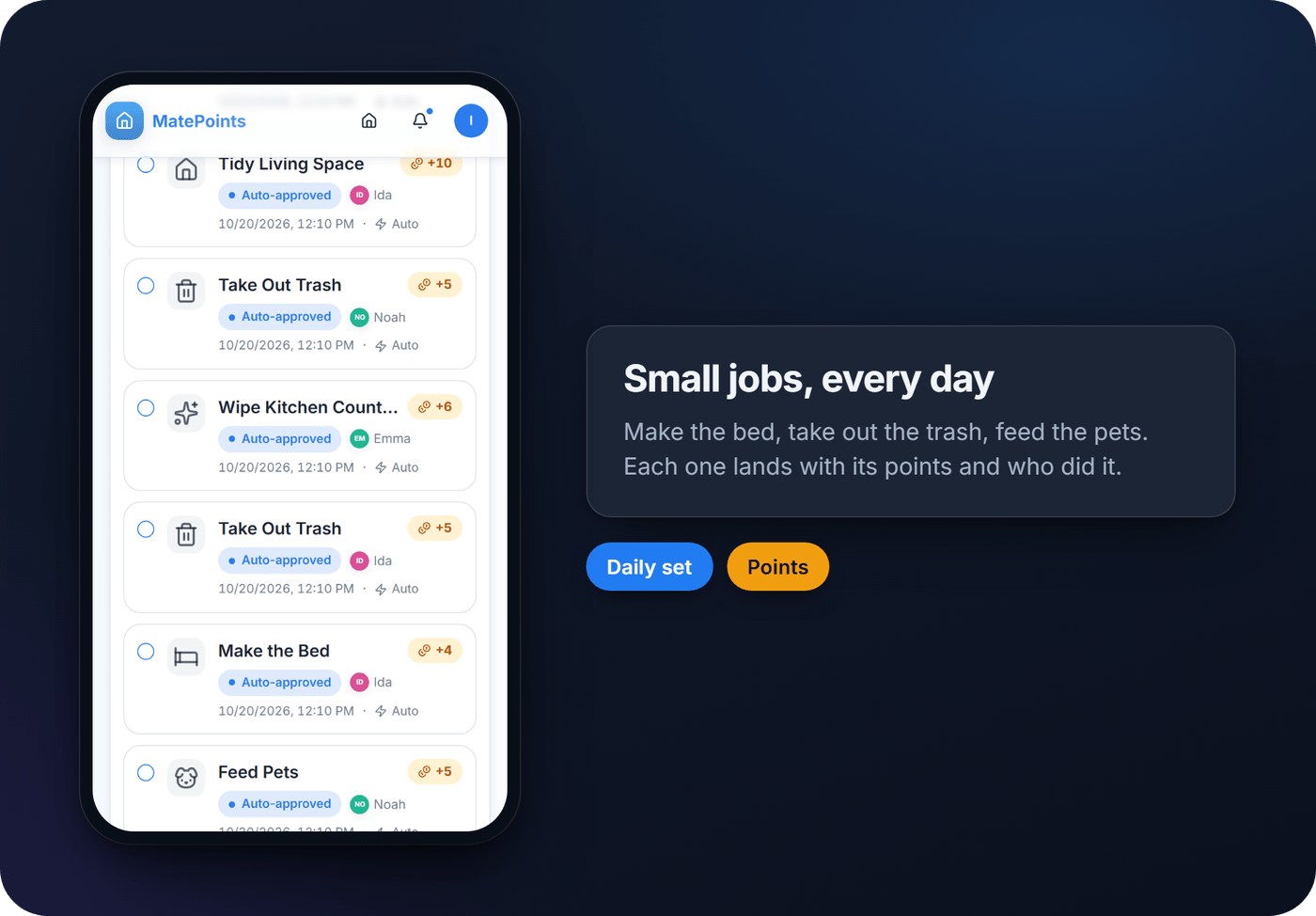
Write the set where the kids will see it. A card on the fridge works, and so does a shared family chore chart that rotates the five-minute jobs so nobody is stuck with the bins all break.
On Christmas Day and New Year's Day, drop the set or cut it to one job. A rhythm that bends on the days that matter survives the days that don't.
One project job per week
The project is the bit children actually enjoy, because it has a beginning and an end. Pick one per week and give it a day:
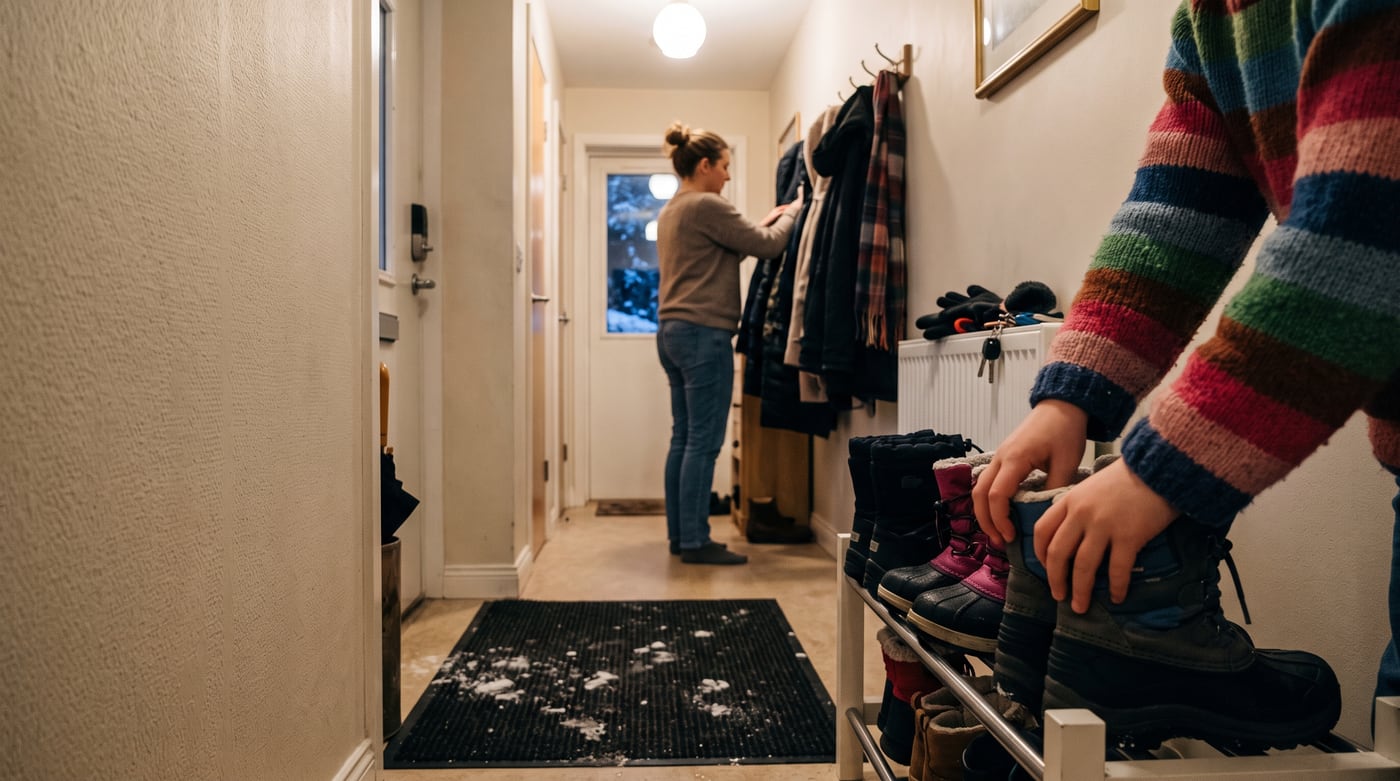
- Week one: help get the house ready. Sort the coats and boots by the door, clear space in the fridge, or set up the guest room.
- Week two: put the year away. Take down and pack the decorations, sort outgrown clothes and toys into keep, give and bin, or clear out the pantry with a parent.
Let the child choose between two options. Choosing is half the motivation, and it costs you nothing.
Make each week a short race
Two weeks is a long time to stay interested in anything. Two one-week races are not. If your break starts on a Monday, it lines up neatly: this winter, Monday 21 December 2026 to Sunday 3 January 2027 is exactly two weeks.
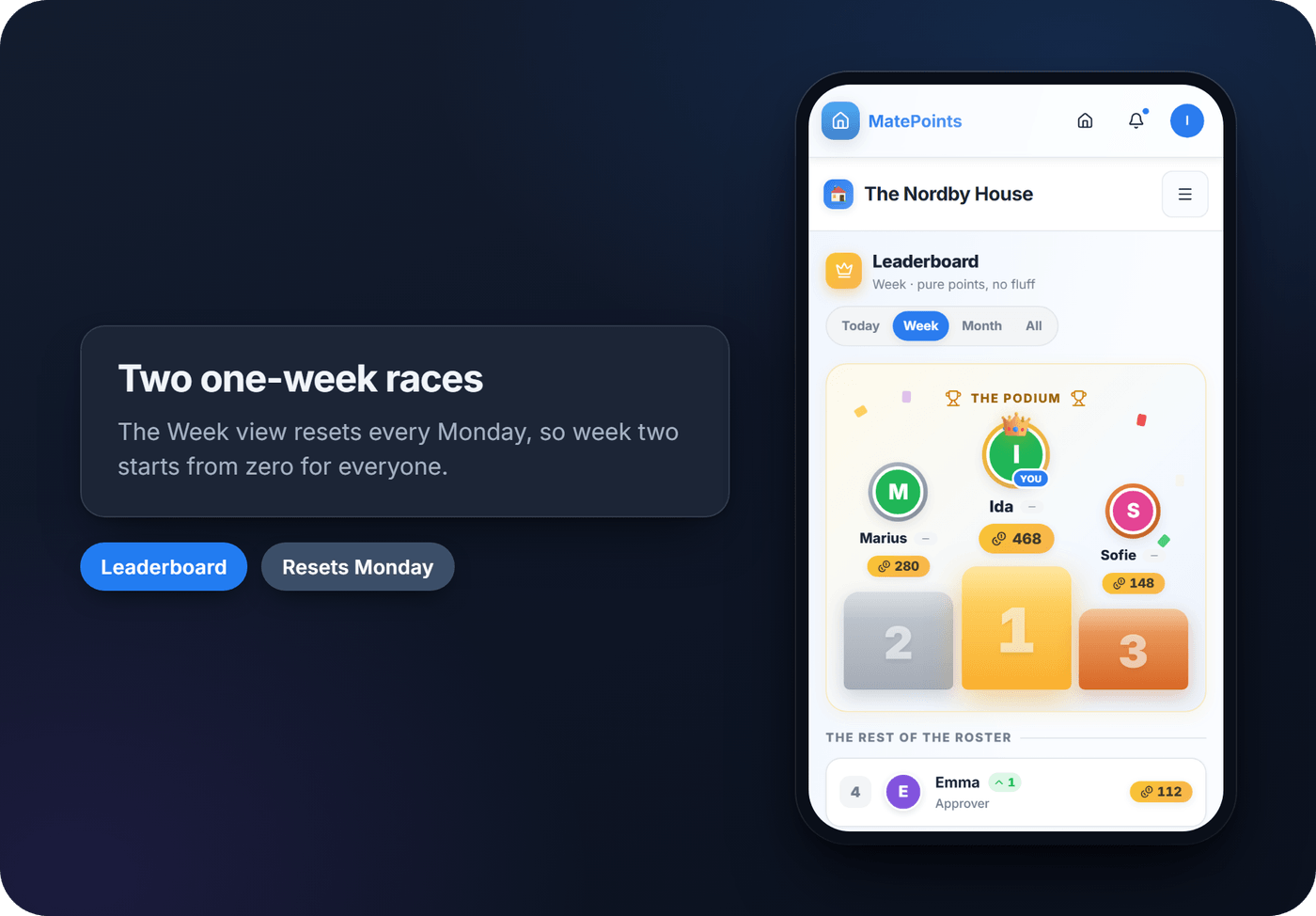
In MatePoints, the leaderboard opens on the Week view by default. It counts points from Monday and resets at midnight on Monday in your household's timezone, so the second week of the break starts from zero for everyone. Only approved chores count, so a job waiting for a parent's OK stays off the board until it gets one. When the new week starts and nobody has scored yet, the board shows last week's champion and the chore they did most, which gives week two something to beat.
A race suits some children and stresses others. If one child always loses, race against last week instead of against each other, or pair the youngest with an older sibling as a team.
The finish line
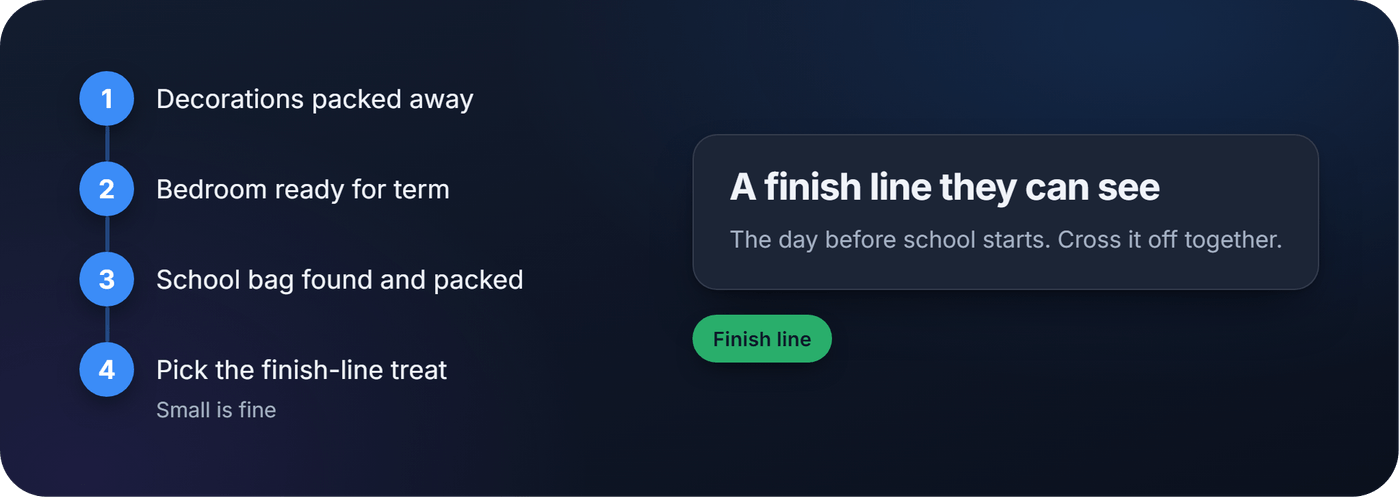
Set the finish line for the day before school starts, and make it concrete: decorations packed, bedroom ready for term, school bag found and packed. Cross it off together.
What happens at the finish line is up to you. A film night chosen by the week's winner, a trip to the sledging hill, a takeaway. If you want rewards inside MatePoints, setting them up is part of the Pro plan; the plan here works without them. Keep the prize small. The point of the break is the rhythm, and a big prize turns the last two days into a negotiation.
If the break doubles as a screen time negotiation, our guide to screen time rewards covers how to link the two without turning every chore into a bargain.
Do chores over the break help children?
They help the house, at the very least. The research on children's development is more careful than most headlines. A 2022 study by Deanna Tepper and colleagues at La Trobe University, summarised by the British Psychological Society, found that children aged 5 to 13 who did more household chores had better working memory and inhibition, as rated by their parents. The link may run either way, though: parents may simply give more chores to children who already organise themselves well. It is a reason to keep chores going, not a promise that a fortnight of bin duty sharpens anyone's brain.
The better reason is simpler. A short daily job and a weekly project give the break a shape, and a shape is what children lose when school stops.
Start on the first Monday
Write the daily set on one card. Pick the two weekly projects. Put the finish line on the calendar. Then start on the first Monday of the break and let the week reset do the rest.
Sources
- Kids inactive and unhealthy during holidays: new research, The Educator, April 2023
- Maintaining Routines and Discipline During the Holiday Break, Erlanger A. Turner, Psychology Today, December 2024
- Age-Appropriate Chores for Children, American Academy of Pediatrics, HealthyChildren.org, 2024
- Doing more chores linked to better executive functioning in kids, but direction of effect is unclear, Emma Young, British Psychological Society Research Digest, August 2022