Volunteer points tracking for community groups
Volunteer points tracking gives a community group credit it can see. Set point values, verify with a tap or a scan, and agree the rules before you start.

Volunteer points tracking is a way of recording who did which job, giving it an agreed value, and letting people trade that value for something the group can offer. It replaces a committee's vague sense of who helps with a record anyone can check. For a residents' association, a sports club or a school committee, that record is usually the difference between the same four people doing everything and the work spreading out.
The numbers say the imbalance is real. Between September 2022 and September 2023, the US Census Bureau and AmeriCorps found that 28.3% of people aged 16 and over formally volunteered, 75.7 million people giving 4.99 billion hours worth an estimated $167.2 billion. The interesting number is not the total. It is the distribution: the average volunteer gave 70 hours that year, and the median gave 24. Half of all volunteers did less than a day a month, while a small core carried far more.
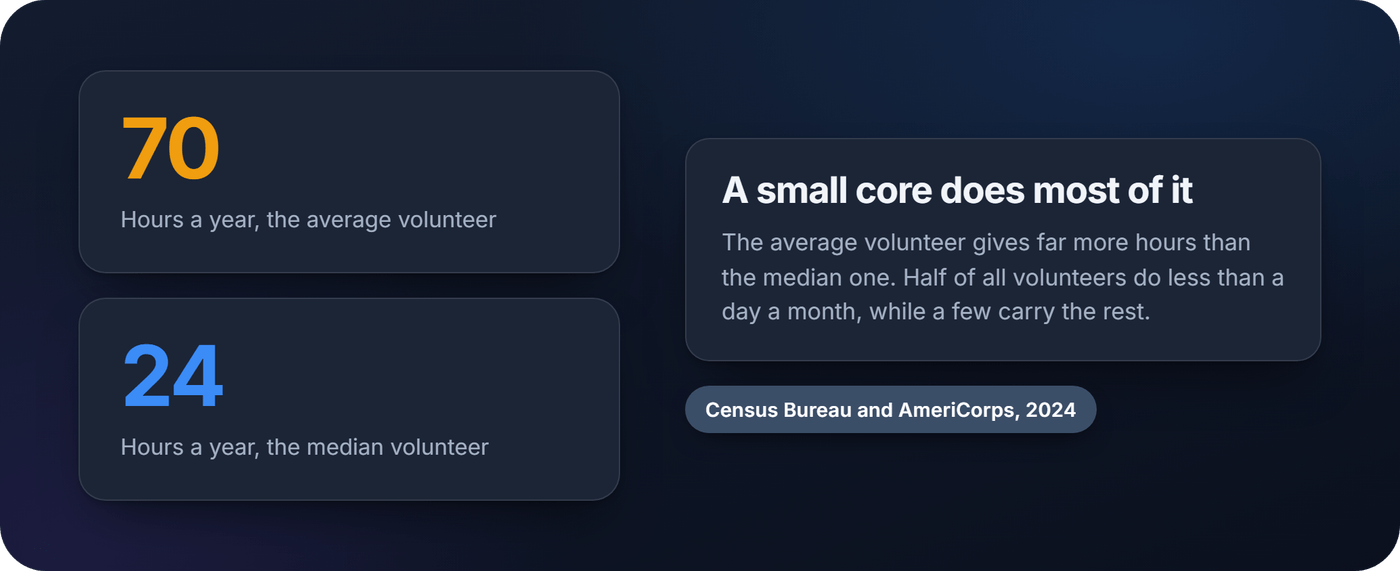
A points system will not conjure new volunteers. What it does is make the gap visible, so the core can stop guessing whether they are imagining it.
The loop every working system runs
Strip away the app, the spreadsheet or the clipboard and the same five steps are underneath:
- Assign. A job exists and carries a point value everyone has seen.
- Do. Somebody does it.
- Verify. Someone or something confirms it happened.
- Credit. The points land on that person's balance.
- Redeem. The balance buys something the group actually offers.
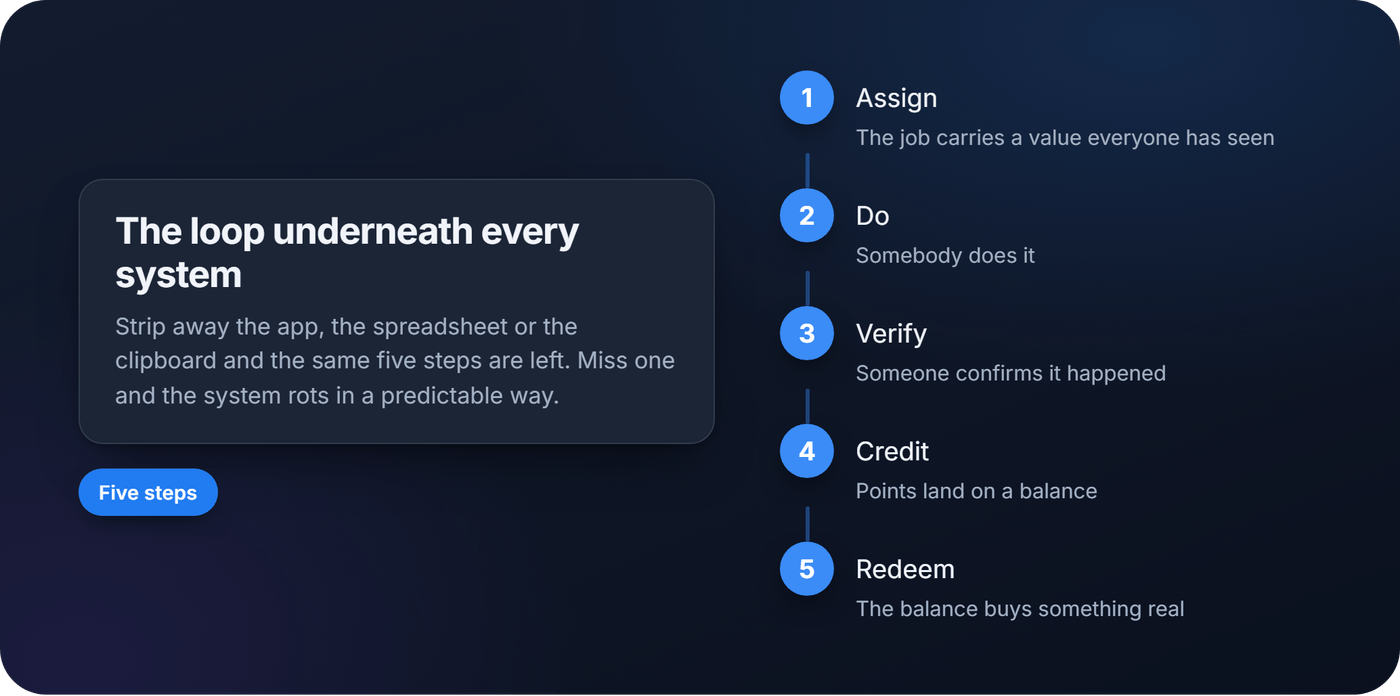
Miss a step and the system rots in a predictable way. No verification and people stop trusting the totals. No redemption and the points are just a scoreboard, which works for a few weeks and then stops working at all.
Set it up before anyone taps anything
Name the problem first. "Four people do all the spring cleanup" and "nobody signs up for the summer rota" are different problems and reward different things. Decide which one you have.
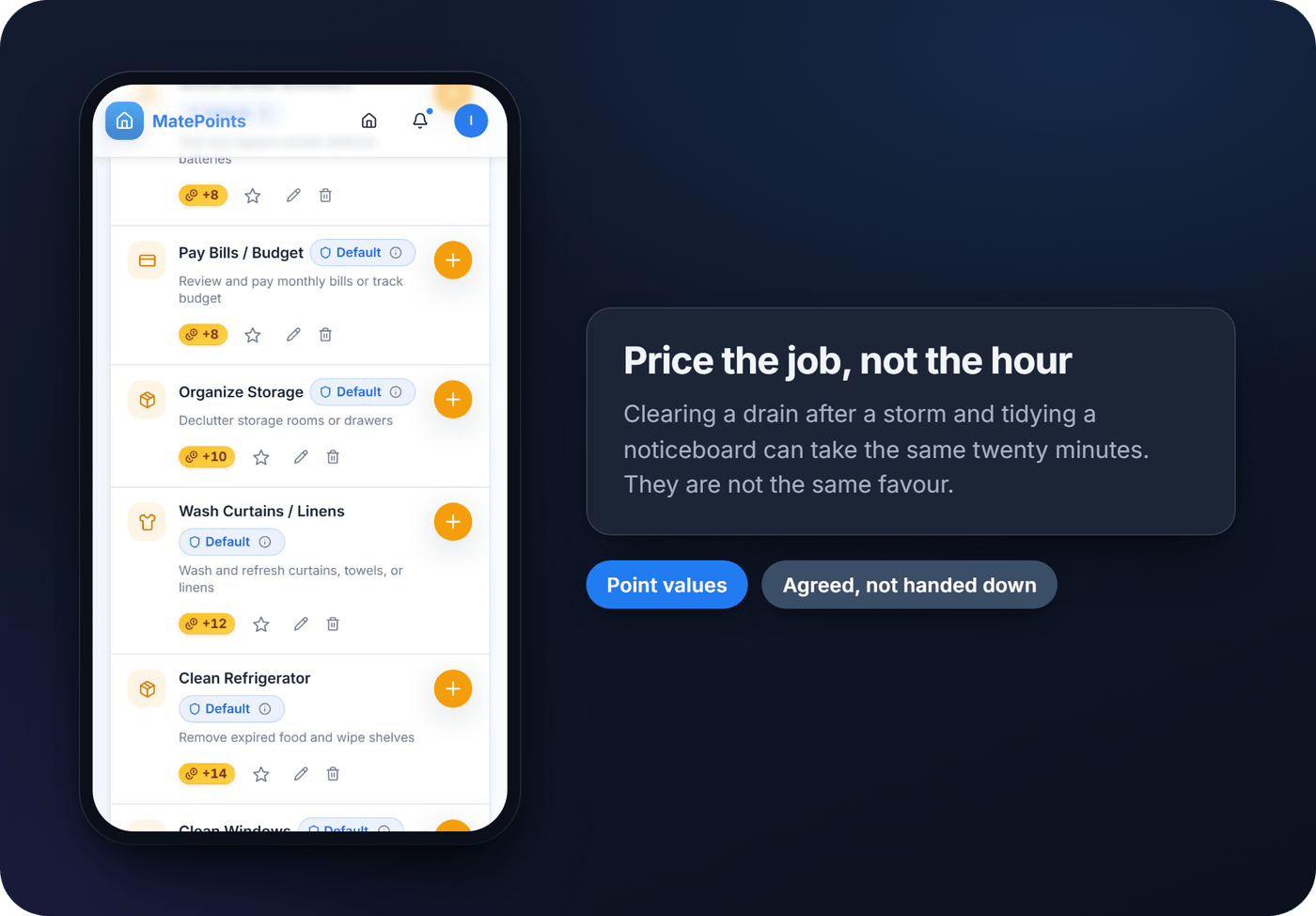
Price jobs by how unpleasant they are, not how long they take. Clearing the drain after a storm and tidying the noticeboard can both take twenty minutes. They are not the same favour. Three tiers is enough: a low band for quick jobs, a middle band for the regular rota, and a high band for the ones nobody volunteers for.
Agree the rewards as a group. This is the step committees skip. Points buy whatever the group can genuinely offer: first pick of the booking calendar, a paid-for coffee run on work day, the storeroom key, a skipped turn on the rota, or simply being named in the newsletter. Write the menu down before the first job is logged. If you need help pricing a reward against a point balance, our guide to building a points system covers the arithmetic.
Decide who approves. Someone has to confirm a job is done and settle a dispute. In a committee that is usually whoever holds the role already, and it helps to separate approving from organising so one person is not both the referee and the biggest scorer.
Write two lines on disputes. Who reviews a contested job, and how long they have. Forty-eight hours is plenty. Without this, one argument in a group chat undoes a season of goodwill.
Run it for a month, then renegotiate. Point values that read as fair on paper rarely survive contact with a real rota.
Verifying the work: tap, scan or a human
Three methods, and most groups end up using all three.
An NFC tag is the lowest-friction option. Stick it where the job happens, on the equipment shed door or the bin store, and a phone tap logs the job in about a second. It suits the jobs people do with their hands full.
A QR code costs nothing beyond printing it. Any phone camera reads one, which matters in a group where you cannot assume what hardware anyone owns. The trade-off is that a code can be photographed and scanned from an armchair, so it fits jobs that are obvious when they have not been done.
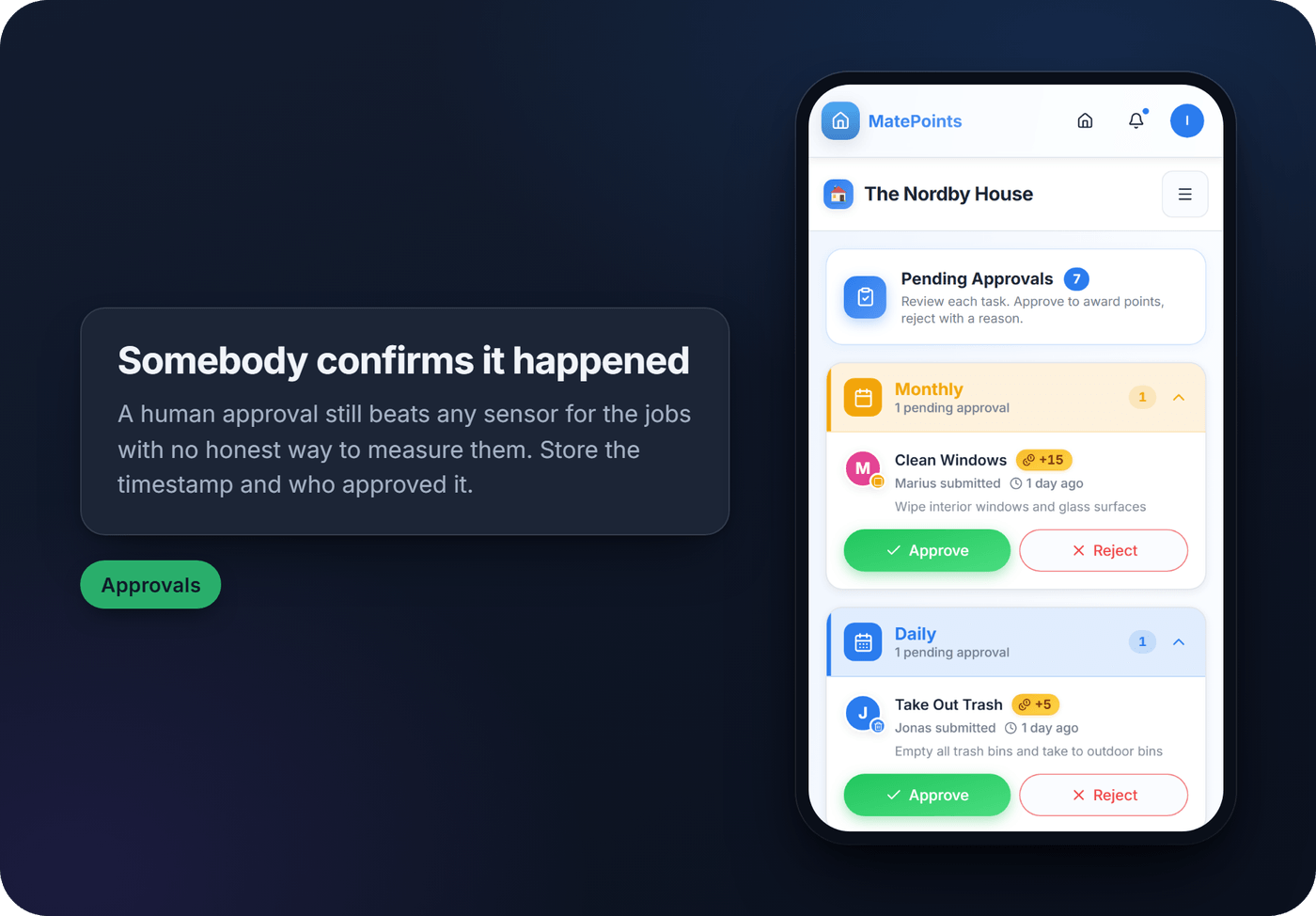
A human approval still beats both for anything subjective. "Tidied the storeroom" has no honest sensor. Someone looks, and confirms.
Whichever you use, store the timestamp and who approved it. That record is what turns "I feel like I do everything" into a question with an answer.
Keeping it alive past the first month
Novelty fades, and that is not a flaw in your rules. It is the documented behaviour of every points system. A systematic review in PLOS ONE covering 15 studies and 10,499 participants found gamification did increase engagement in 12 of them, but that the positive effect appeared to lessen over time, because points and badges "wear off after a short period of novelty".
The encouraging news is that the fade is not a collapse. In a 12-week trial published in JAMA Internal Medicine, 94 families competing in teams hit their goal on 53% of days against 32% for the control group. Twelve weeks after the game was switched off, they were still ahead, 44% against 33%. Social accountability kept working after the mechanics stopped.
So plan for iteration rather than a launch:
- Re-price the jobs every season. A task that was fair in March can be resented by September.
- Rotate which jobs carry bonus points, so the same three people are not the only ones with anything to earn.
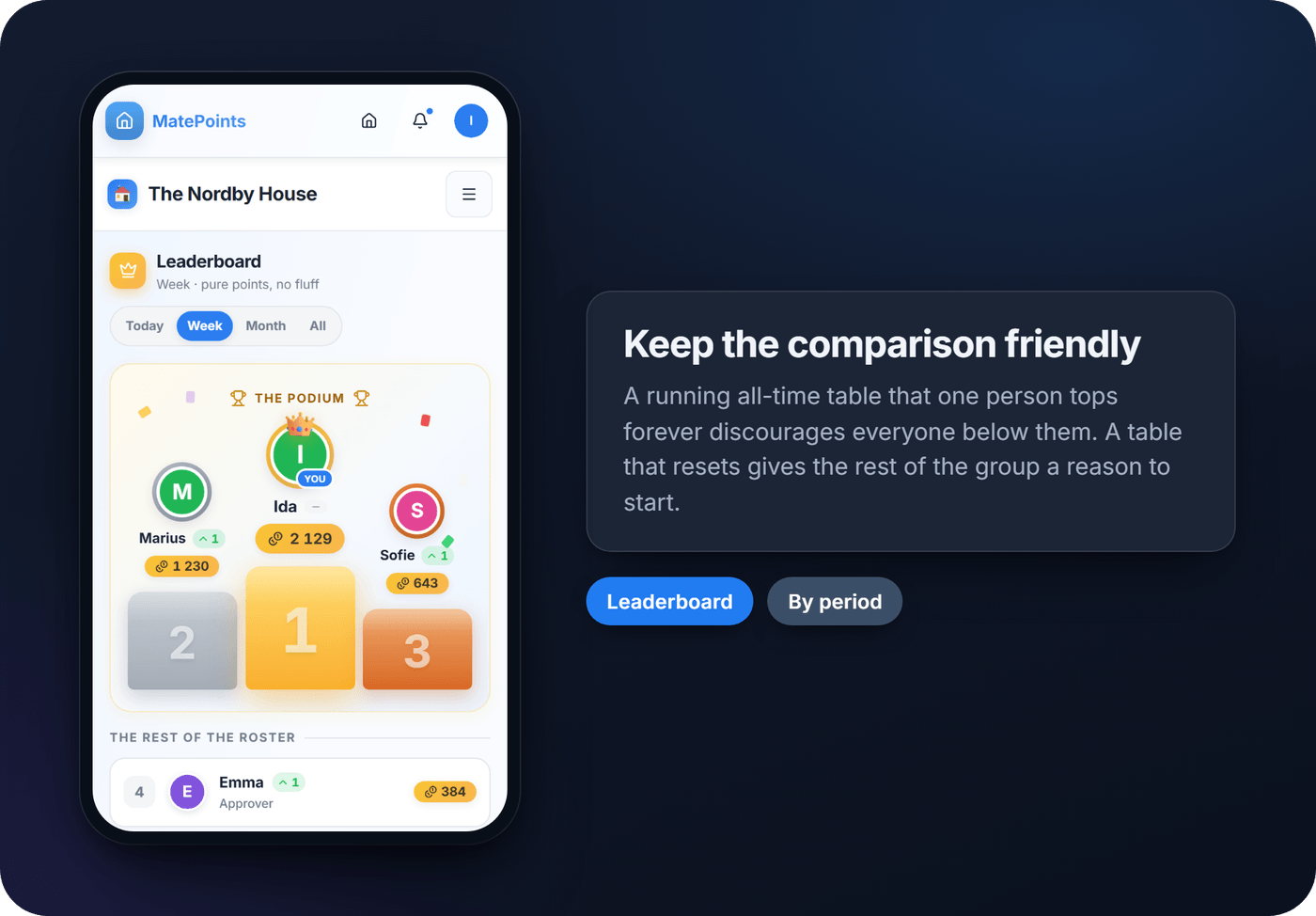
- Keep the comparison friendly. A running all-time table that one person tops forever discourages everyone below them. A table that resets each season gives the rest of the group a reason to start.
What points cannot do
A points system makes effort visible and gives people a reason to do a job without being asked twice. It will not fix a committee where one person feels used, and it is not a substitute for saying so out loud. The moment the totals become the argument rather than the evidence, the system has stopped helping.
The groups that keep one running treat it as bookkeeping, not management. They let members argue about the prices rather than handing them down, and they keep the private conversation about workload separate from the public table.
Marcus
Running it in MatePoints
MatePoints is built around exactly this loop. You create a group, invite the people in it, and give every job a point value. Completions go through an approval step, so a job is credited by a person rather than on trust. Roles decide who can edit the jobs and who can approve them, which keeps the referee and the organiser separate. A leaderboard and per-member statistics show where the effort actually sat this month, and the history keeps the receipts.
Tap-to-complete is the part worth planning for. Writing an NFC sticker or generating a QR poster for a job is a Pro feature, and the group needs a Pro owner for tapping to work at all. Once one person has set the tags up, everyone in the group can use them, including members on the free plan. The free plan covers the jobs, the points, the approvals and the leaderboard, which is enough to run the whole system by hand before anyone buys anything.
Two honest limits. MatePoints does not integrate with smart-home devices or sensors, so nothing detects a job for you. And the free plan caps how many groups and members you can have, with Pro raising those ceilings rather than removing them. The Subscription page shows the current numbers for your account.
Start with one job, one tag and one reward for a month. You will learn more from how your group reacts to that than from any setup guide, this one included.
Sources
- Volunteering and Civic Life in America, US Census Bureau and AmeriCorps, November 2024
- Does gamification increase engagement with online programs? A systematic review, Looyestyn et al., PLOS ONE, 2017
- Effect of a Game-Based Intervention Designed to Enhance Social Incentives to Increase Physical Activity Among Families, Patel et al., JAMA Internal Medicine, 2017
FAQ
What is volunteer points tracking?
It is a record of who did which job for a group, with each job carrying an agreed point value that members can later trade for something the group offers. It turns an informal sense of who helps into a record anyone can check.
How do I decide what each job is worth?
Price by unpleasantness rather than by the clock, and use three bands: quick jobs, the regular rota, and the jobs nobody volunteers for. Agree the bands as a group, then revisit them after a month of real use.
Is NFC or QR better for logging volunteer work?
NFC is faster and harder to fake because the tag has to be physically tapped. QR costs nothing and works on any phone with a camera, which matters when you cannot assume what hardware people own. Many groups use QR for the printed rota and NFC on equipment.
How do you stop a points system causing arguments?
Agree the prices and the dispute rule before the first job is logged, keep a short review window, and keep the conversation about workload separate from the public table. The record should end an argument, not start one.