When you and your partner disagree on what clean means
Different standards of clean cause more fights than lazy partners do. Write one line for what done means on each shared job, and stop arguing about it.

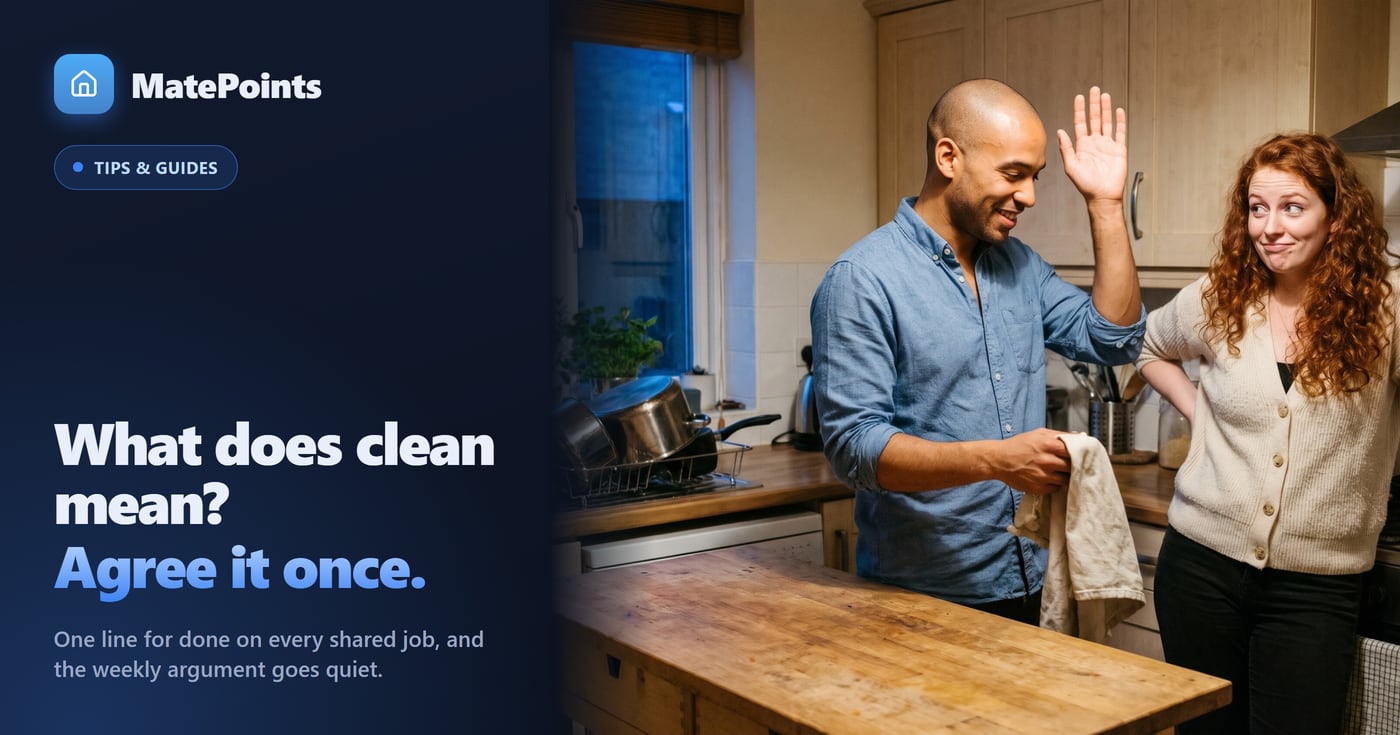
One of you says the kitchen is clean. The other walks in and sees crumbs on the hob, a pan "soaking" and a bin that is one teabag from overflowing. Neither of you is lazy and neither of you is fussy. You just have different standards of clean, and nobody ever said out loud where "done" is. This guide shows how to agree on it once, job by job, so you can stop having the same argument every week.
It is one of the most common fights at home
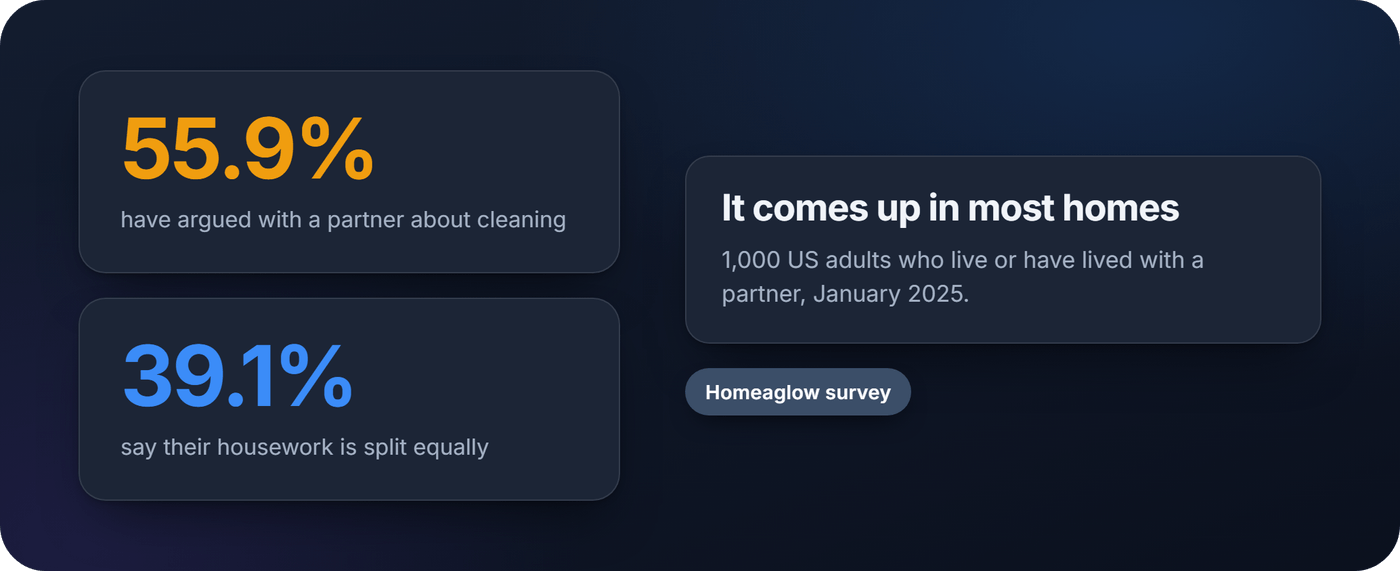
Arguments about cleaning are ordinary. In a 2025 survey of 1,000 US adults who live or have lived with a partner, 55.9 percent said they had argued with a partner about cleaning. Only 39.1 percent said their housework is split equally. The survey was run by Homeaglow, a cleaning company, so read it as a sign of how common the argument is, not as research.
Many of those fights are not about who does the work. They are about whether the work was finished. One person cleans to their standard, the other checks against theirs, and both feel let down.
What the usual advice says, and what it leaves out
Most advice gets the first half right. Writing for Marriage.com, counsellor Tatiana Morris suggests that partners sit together and come to "an honest agreement about what level of order and cleanliness you both commit to sustaining" in the rooms you share, and leave each other a space to keep as they like. A much older post from cleaning company Purple Fig makes the same point: it may help to "agree upon what your mutual level of clean will be for each room or task".
Both are good advice. Neither says how to write the agreement down so it survives the next busy week. "A level of cleanliness" is still a feeling. It needs to become something you can check.
Turn "clean" into one line per job
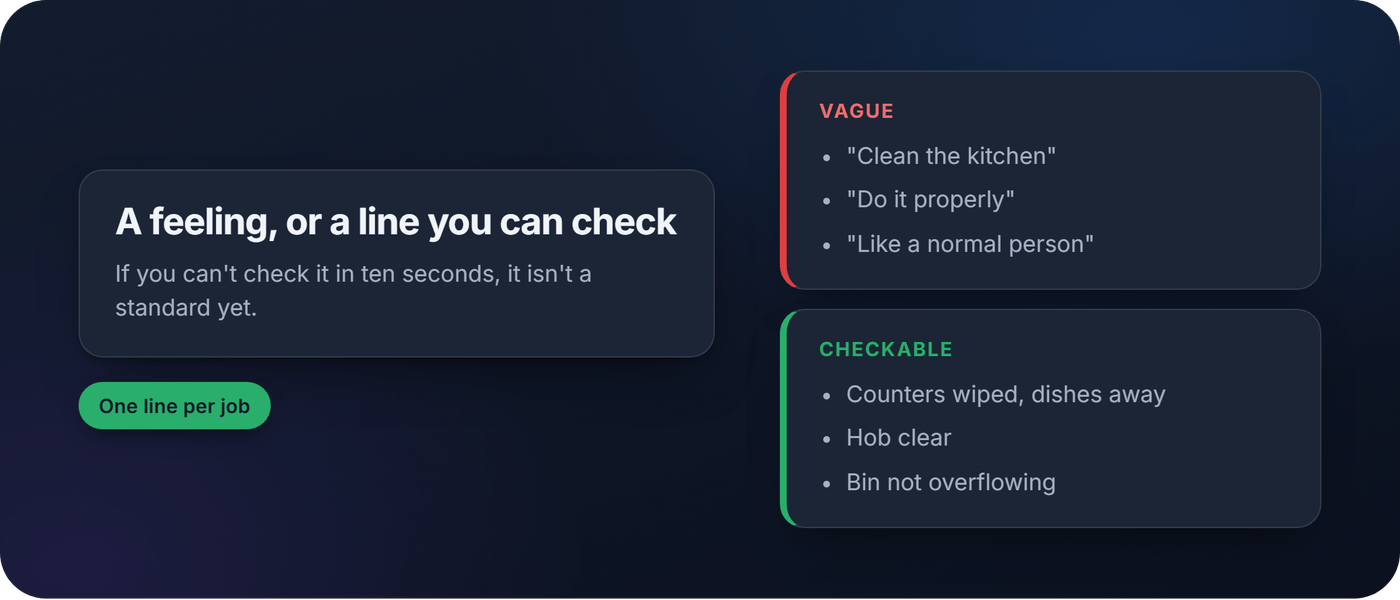
The fix is simple: for each shared job, write one short sentence that says what done looks like. Something you could check in ten seconds.
A few examples:
- Kitchen after dinner: counters wiped, dishes in the dishwasher or the rack, hob clear, nothing left soaking overnight.
- Bathroom weekly: sink and mirror wiped, toilet cleaned, floor mopped, fresh towels.
- Living room: cushions back, nothing on the floor, cups to the kitchen.
- Laundry: washed, dried and put away. Not left in the basket.
Notice what these don't say. No "properly", no "nicely", no "like a normal person". Each line is a list of things you can see.
Agree it once, in five steps
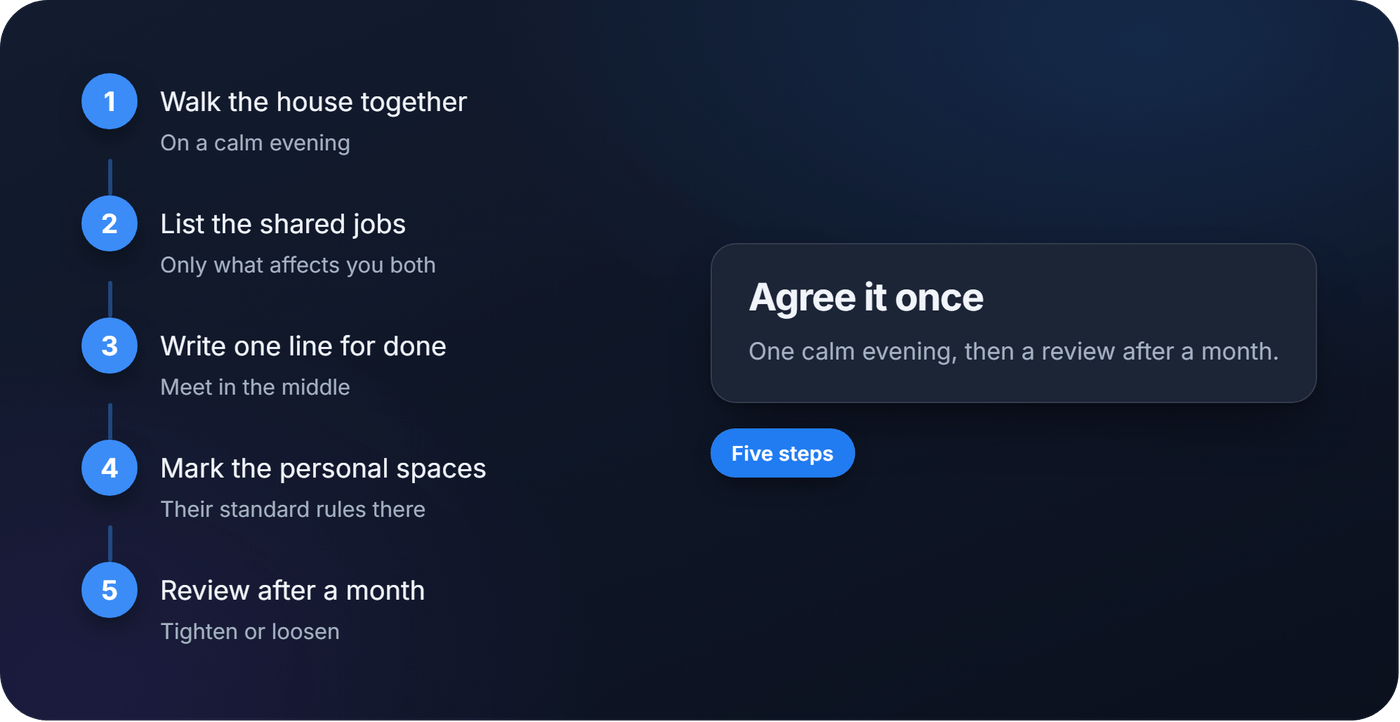
1. Walk the house together
Go room by room on a calm evening, not in the middle of an argument. Say what bothers you most in each room. You will often find you care about different things, not more or less.
2. List the shared jobs
Only the jobs that affect both of you. Your desk or your side of the wardrobe is not on the list.
3. Write one line for done on each
Meet in the middle. If one of you wants the floor mopped daily and the other monthly, settle on weekly and write it down. Whoever cares more about a job can offer to own it, rather than asking the other to care more.

4. Mark the personal spaces
Agree which spaces are each person's own. Inside them, their standard rules. That gives the tidier partner a calm shared space and the relaxed partner somewhere to relax.
5. Review it after a month
Some lines will be too strict and some too loose. Change them. The point is a standard you both chose, not the first draft.
Keep the standard where the job is
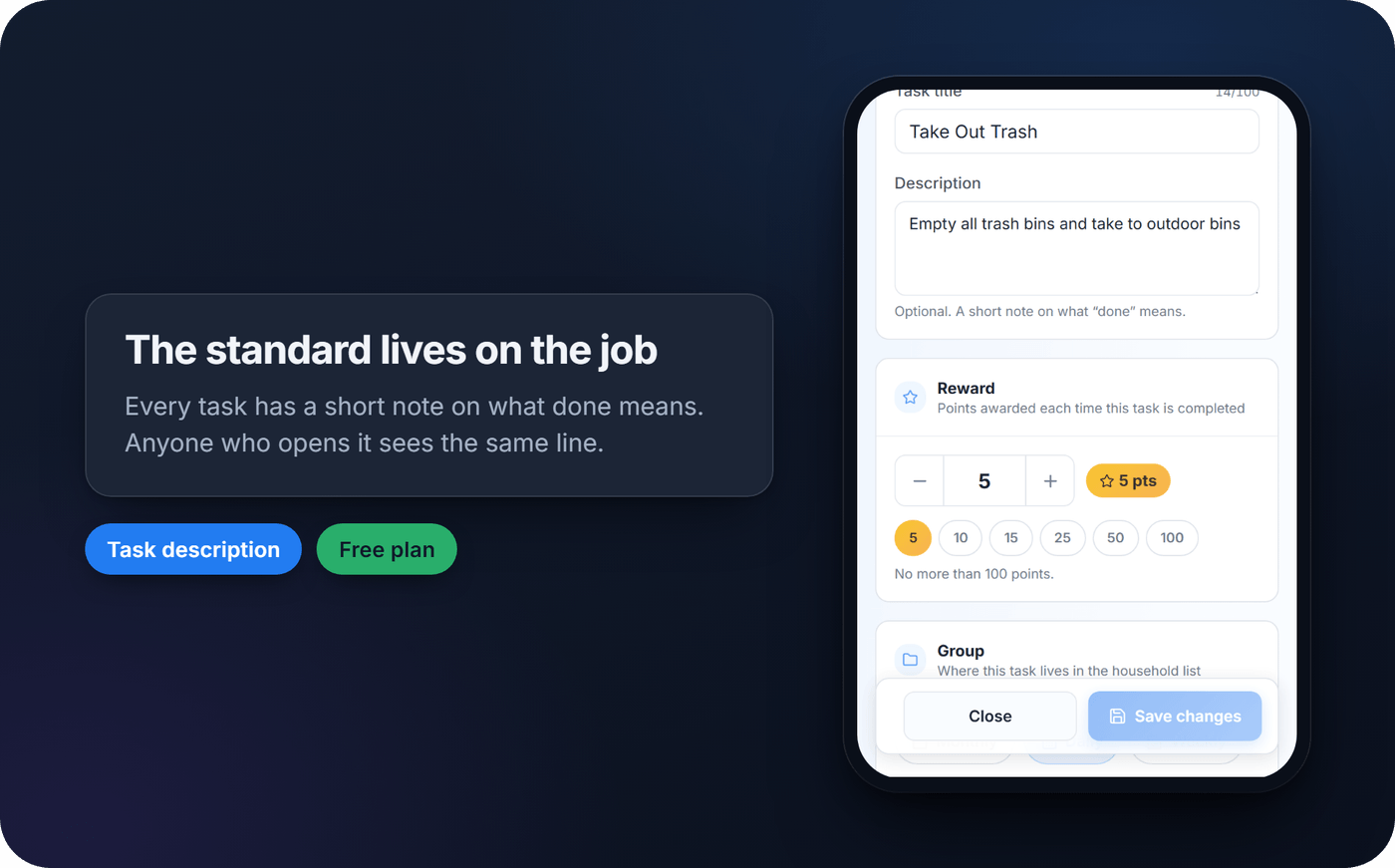
A standard written on a piece of paper gets lost. One that lives on the job itself gets read. In MatePoints, every task has a description, and the task editor calls it exactly what it is: a short note on what done means. Write your one line there, and anyone who opens the task sees the same standard.
Some households, especially flatshares, like a second pair of eyes too. With approval switched on, a finished job waits until someone checks it against the line and approves it, or rejects it with a reason. Plenty of couples never need that. It is there for the homes that do.

When the line keeps being missed
Writing the standard down doesn't mean it will be met every time. When a job keeps falling short, check three things before you raise it.
Is the line still realistic? A standard that suited a quiet month can fail in a busy one. If it is missed every week, it may be the line that needs to change, not the person.
Does the right person own it? A job owned by the partner who cares less will usually be done to the minimum. Swapping it for a job they care about more can fix a standoff in one conversation.
Are you talking about the line or the person? "The hob wasn't on the list tonight" is a conversation. "You never clean properly" is a fight. The line gives you the first sentence, so use it.
Clean is whatever you both agreed
There is no correct standard of clean. There is only the one you both agreed to. Write it down job by job and most of the weekly arguments have nothing left to feed on. If you share with friends rather than a partner, how to live with a messy roommate covers the flatshare version. Moving in soon? Read moving in together: split the chores before the boxes. For the wider question of who does what, splitting chores with your partner compares four ways couples divide the load.
Pick one room tonight and write the line. If you want the standard to live on the job itself, MatePoints is free to start.