No spend January with kids: rewards that cost nothing
Planning a no spend January with kids? Keep them helping without buying a thing: free rewards made of time and choice, and a goal worth saving for.

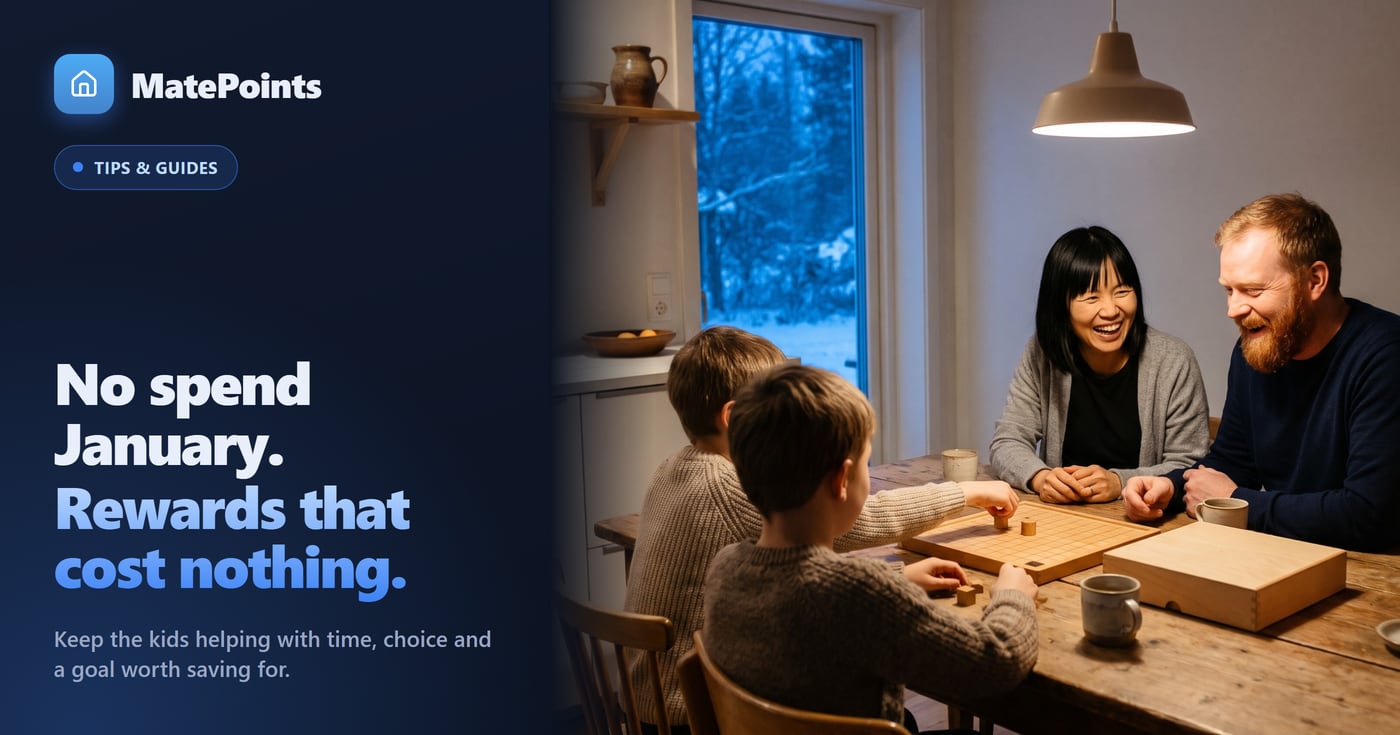
A no spend January is easy to plan for adults. Cancel a subscription, cook from the freezer, skip the sales. With kids it gets harder, because kids are used to a small treat for helping, and most treats cost money. This guide shows how to run a no spend January with kids without the helping stopping: rewards made of time and choice, a goal worth saving for, and a few simple rules you set up before the month starts.
Why the kids are the hard part
No spend months are popular. One Mumsnet thread about a no spend January, started on 27 December 2025, ran to 604 replies over 25 pages. Most of it is about groceries, bills and meal plans. Children come up mainly as a problem. One grandparent admits a family visit will be hard because "I love treating my grandchildren."
That is the real challenge. If the treat at the end of a chore is a sweet, a toy or a few coins, a no spend month quietly removes the reason to help. Plan the rewards before January starts, and the helping can carry on.
What kids do with money already
Kids are better savers than we give them credit for. NatWest Rooster Money's Pocket Money Index 2026, based on its users' data from March 2025 to February 2026, found an average of £9.74 a week in overall pocket money, up 6.7 percent on the year before. It also found that around 56 percent of the money children save goes into pots with a specific goal attached. Holiday and travel has overtaken gaming as the most popular goal.
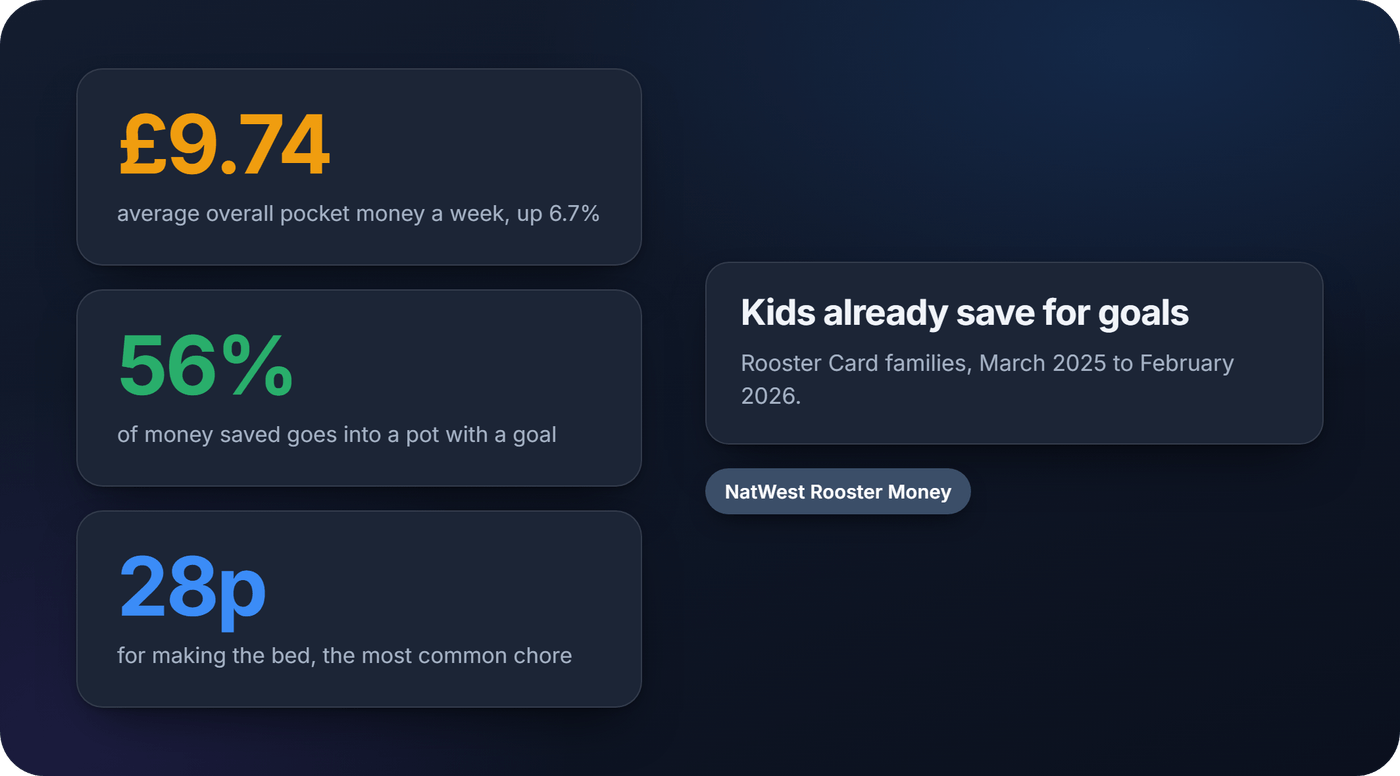
The same index found making the bed is the most common paid chore for the fourth year running, at an average of 28 pence a time. So the habit of earning for chores is real, and so is the habit of saving toward something. A no spend month can use both.
Rewards that cost nothing
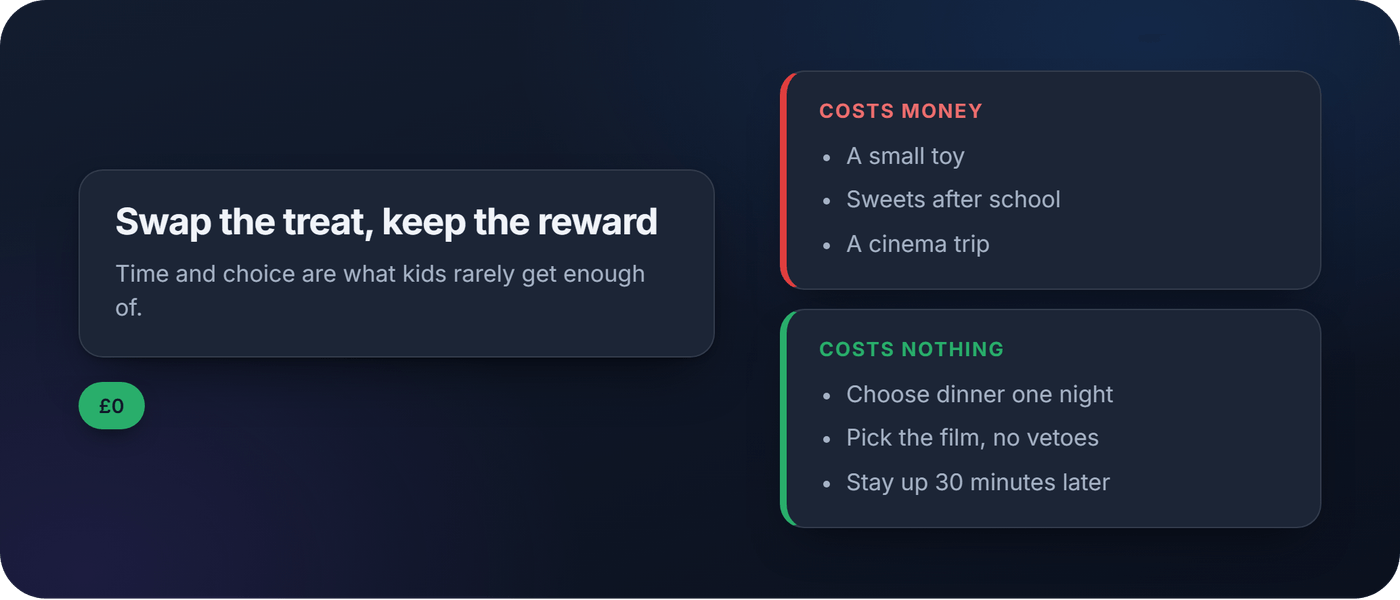
The best free rewards are made of two things kids rarely get enough of: your time, and a say in what happens. Some that work across ages:
- Choose dinner one night, from what is already in the cupboard.
- Pick the film for movie night, with no vetoes.
- Stay up 30 minutes later on a Friday or Saturday.
- A one-to-one hour with a parent, doing whatever they choose at home.
- Skip one chore next week, or hand it to a sibling who agrees.
- Run game night: choose the game and the snack from the cupboard.
- First go at the bath, the front seat or the shower in the morning.
Teenagers often care most about freedom and privacy, so a later curfew or a night off from family plans can be worth more than anything you could buy. For more ideas that suit older kids, see teen reward ideas.

Set up the month in one evening
A no spend month works best when the rules are clear from the first day. Sit down together at the end of December and agree four things.
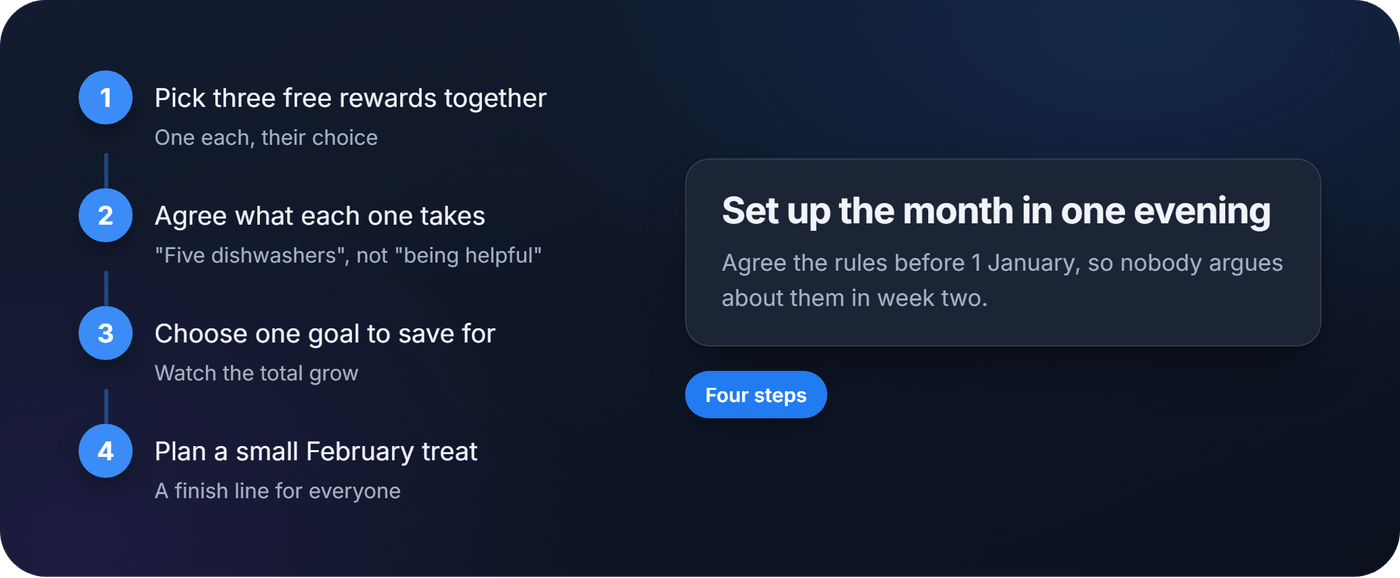
1. Pick three free rewards together
Let each child choose from the list above, or suggest their own. A reward they picked is a reward they will work for.
2. Agree what each one takes
"Five dishwashers emptied" or "a week of making your bed" is clear. "Being helpful" is not. Decide it together, and write it down where everyone can see it.
3. Choose one goal to save for
If your kids get pocket money, January is a good month to let it build. Agree one goal for the end of the month, ideally something they chose, and keep a running total so they can watch it grow.
4. Plan a small February treat
A no spend month feels shorter with something at the end of it. A trip to the swimming pool or a pizza night on 1 February gives the whole family a finish line.
Keep the score without a shop
Free rewards need one thing a bought treat doesn't: a record of who earned what, so "you said I could pick the film" doesn't turn into an argument. This is where MatePoints helps. Each chore becomes a task with a point value, and a parent approves it when it is done.
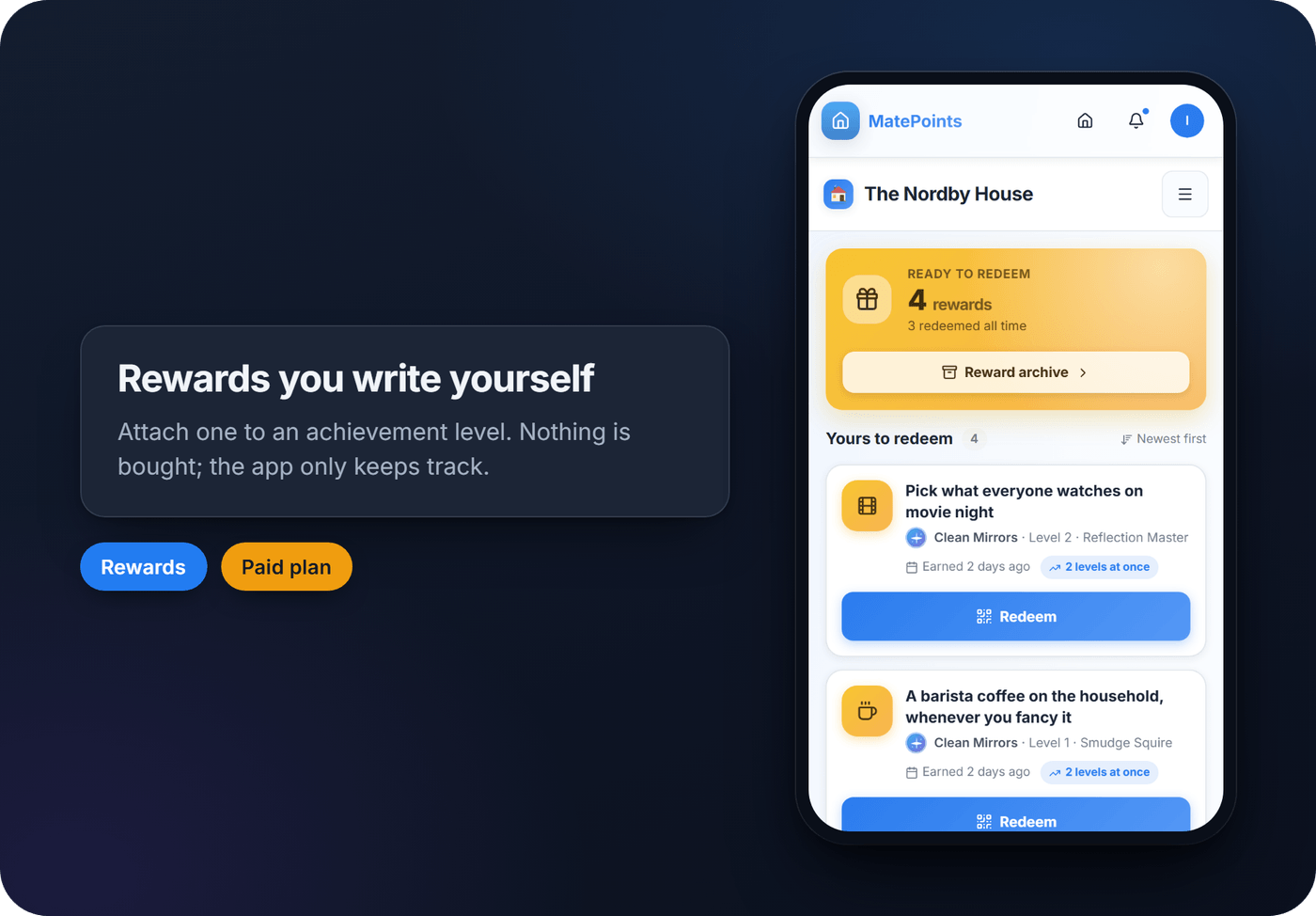
On the paid plan, you can attach rewards to achievements. You write the reward yourself, in your own words: "Pick what everyone watches on movie night." When your child reaches that level on the task, the reward appears for them, ready to redeem with a code you scan. Nothing is bought. MatePoints never sells or pays for a reward; it just keeps track of the one you wrote.
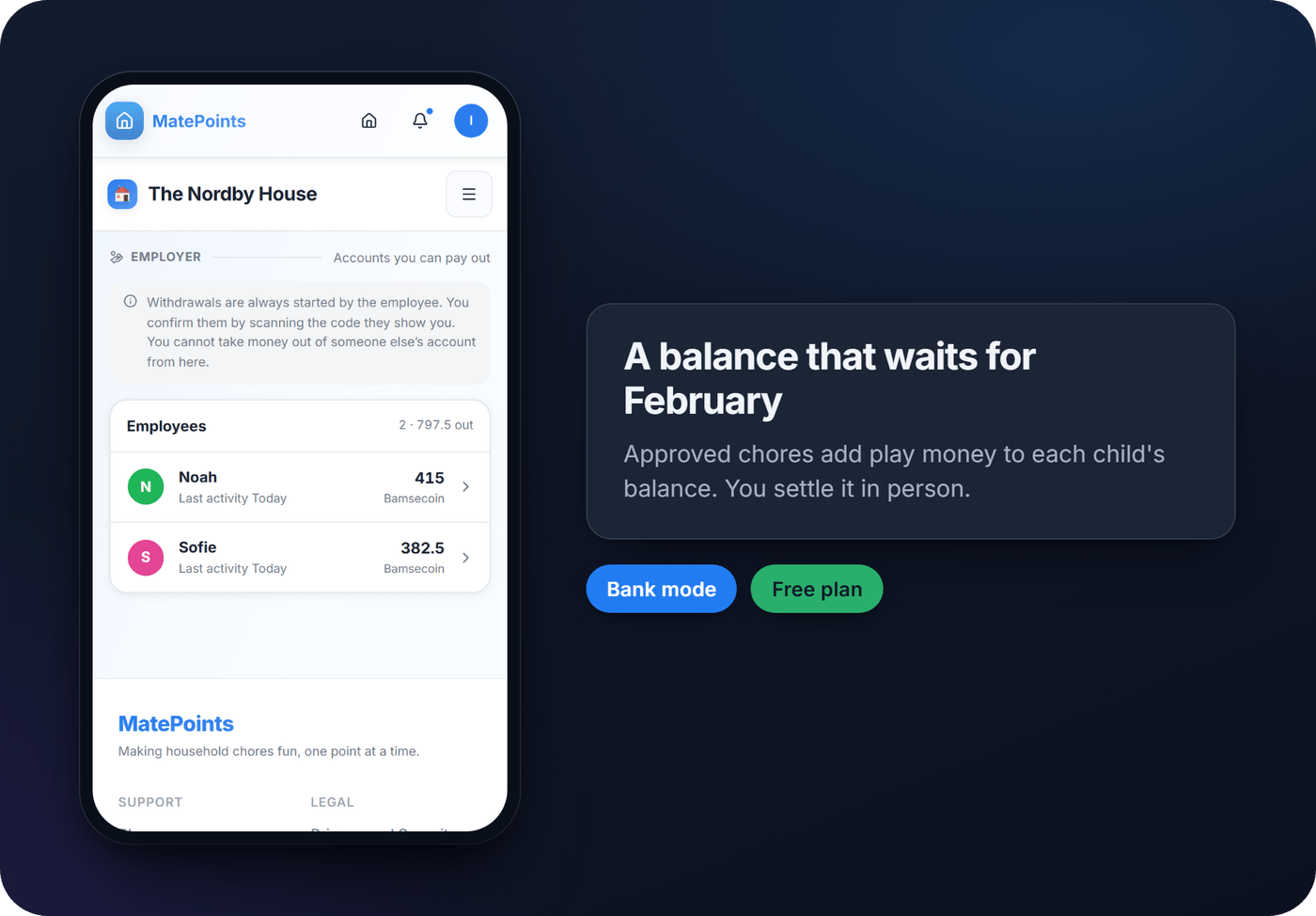
For the savings goal, there is Bank mode, which is free. You name a play-money currency and set how many points make one unit. Approved chores add to each child's balance, and the balance simply builds up through January. When the month is over, your child starts a withdrawal and you settle it in person, in whatever form your family agreed. MatePoints keeps the books; it never holds or moves real money.
A month that teaches more than saving
A no spend January with kids is not only about the bank balance. It shows them that your time and their choices are worth working for, and that waiting for something makes it better. If you want to go further on money and chores, allowance and chores covers whether to pay for chores at all, and reward charts for kids covers keeping younger children motivated.
Pick your three free rewards before New Year's Eve. If you want the score kept for you, MatePoints is free to start.