Kids do chores badly? Check the work, not the kid
Kids do chores badly, then you redo them or nag. Agree what done looks like first, then check it before it counts. A calm, five-step routine.

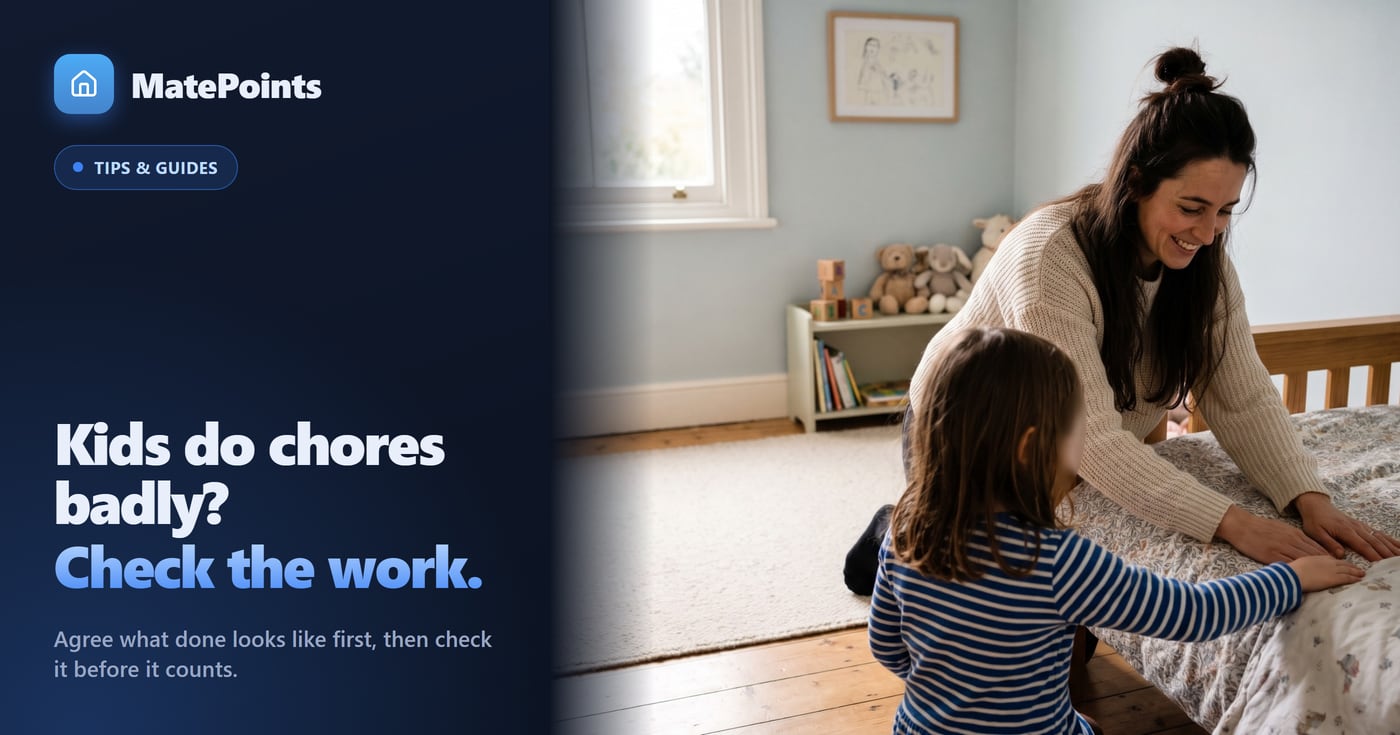
Your kid says the bathroom is done. The sink still has toothpaste in it, the towel is on the floor, and the mirror has a new smear. Now you have three bad options: redo it yourself, send them back with a lecture, or let it go and quietly resent it. When kids do chores badly, the problem is rarely laziness. It is usually that nobody agreed what done looks like. This guide shows how to fix that, and how to check the work without turning every chore into a fight.
Two camps, and the step they both skip
Parenting advice on half-done chores splits into two camps.
The first says make them do it again. Rita Templeton, writing in Scary Mommy, puts it plainly: she doesn't pronounce a job passable until it meets "a standard I know they're capable of", and if it doesn't, "they get the pleasure of doing it again."
The second says leave it alone. In a guide for Children's Hospital of Philadelphia, pediatrician Patrick Pasquariello advises: "Resist the temptation to do over anything your child has done." Re-wiping the sink after them teaches a child their effort doesn't count.
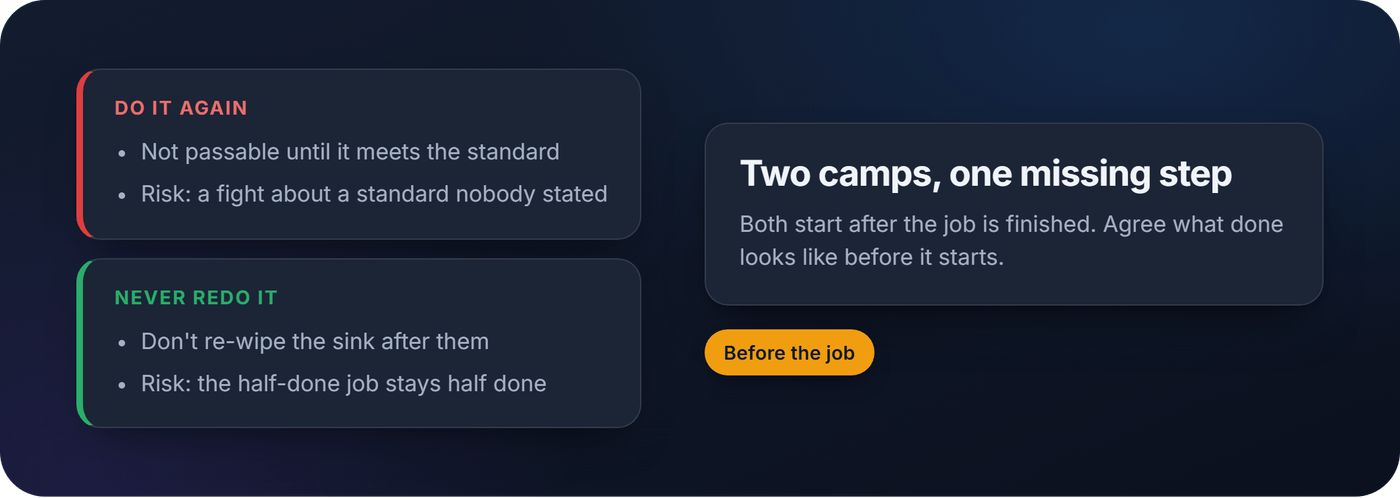
Both have a point. But both start after the job is finished, when the disagreement already exists. The step they skip comes first: agreeing what "done" means before anyone picks up a sponge. The same CHOP guide hints at it: "With any new chores, first show your child how things should be done."
Why kids do chores badly
Picture a nine-year-old told to "clean your room". To an adult that means floor clear, bed made, clothes in the basket, desk tidy. To the nine-year-old it means the floor is mostly visible. They did what they understood. You checked against what you meant.
That gap explains most half-done chores:
- The job was never defined. "Clean the bathroom" is five jobs, and a child will pick the two they noticed.
- They don't know how. Nobody showed them how to wipe a mirror without streaks. They are guessing.
- The standard keeps moving. Fine on Monday, not good enough on Thursday, depending on how tired you are.
- Nothing happens either way. If a rushed job and a careful one get the same response, rushing wins.
Some of it is effort, of course. Templeton's distinction is a fair one: she can tell "when they've tried versus when they've just been lazy". But you can only judge effort once the target is clear.
The fix: a check-in, not a lecture
Here is a routine that works for most ages from about six up. It takes a little setup and saves a lot of nagging.
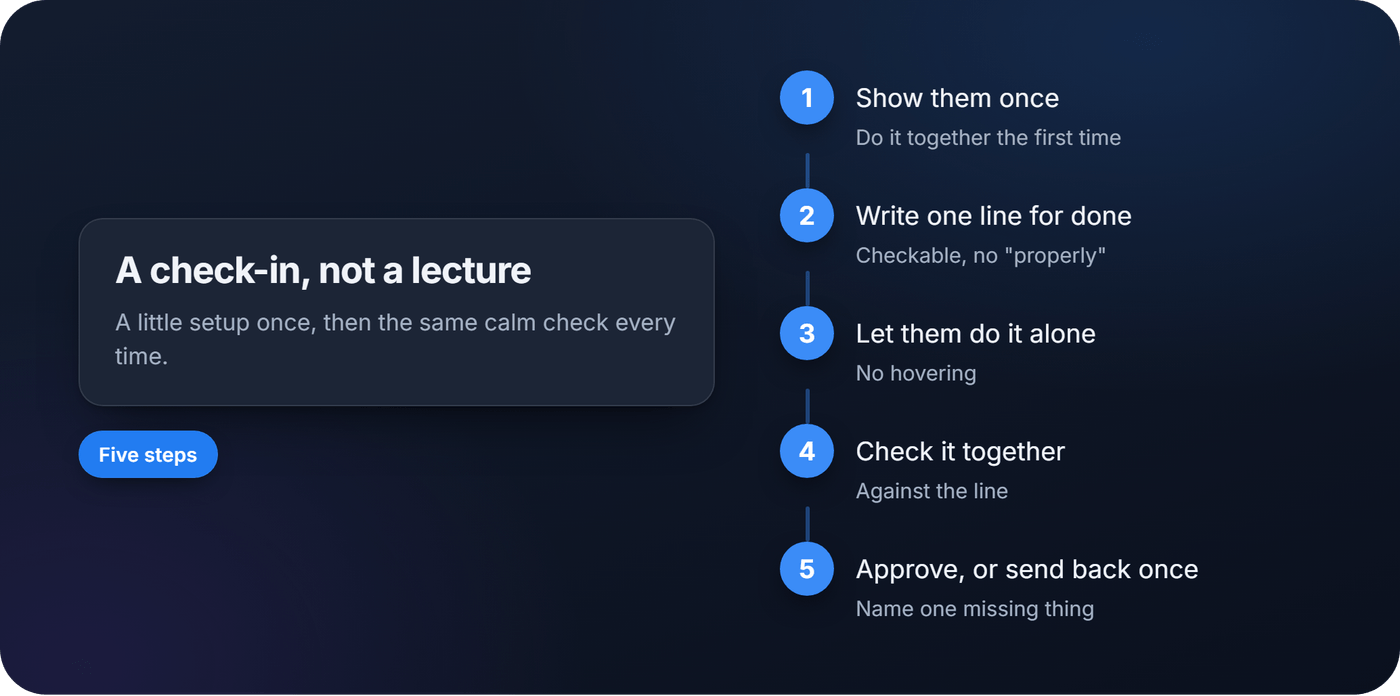
1. Show them once
Do the chore together the first time, as CHOP suggests. Talk through what you are doing and why. Then let them do it while you watch.
2. Write one line for what done means
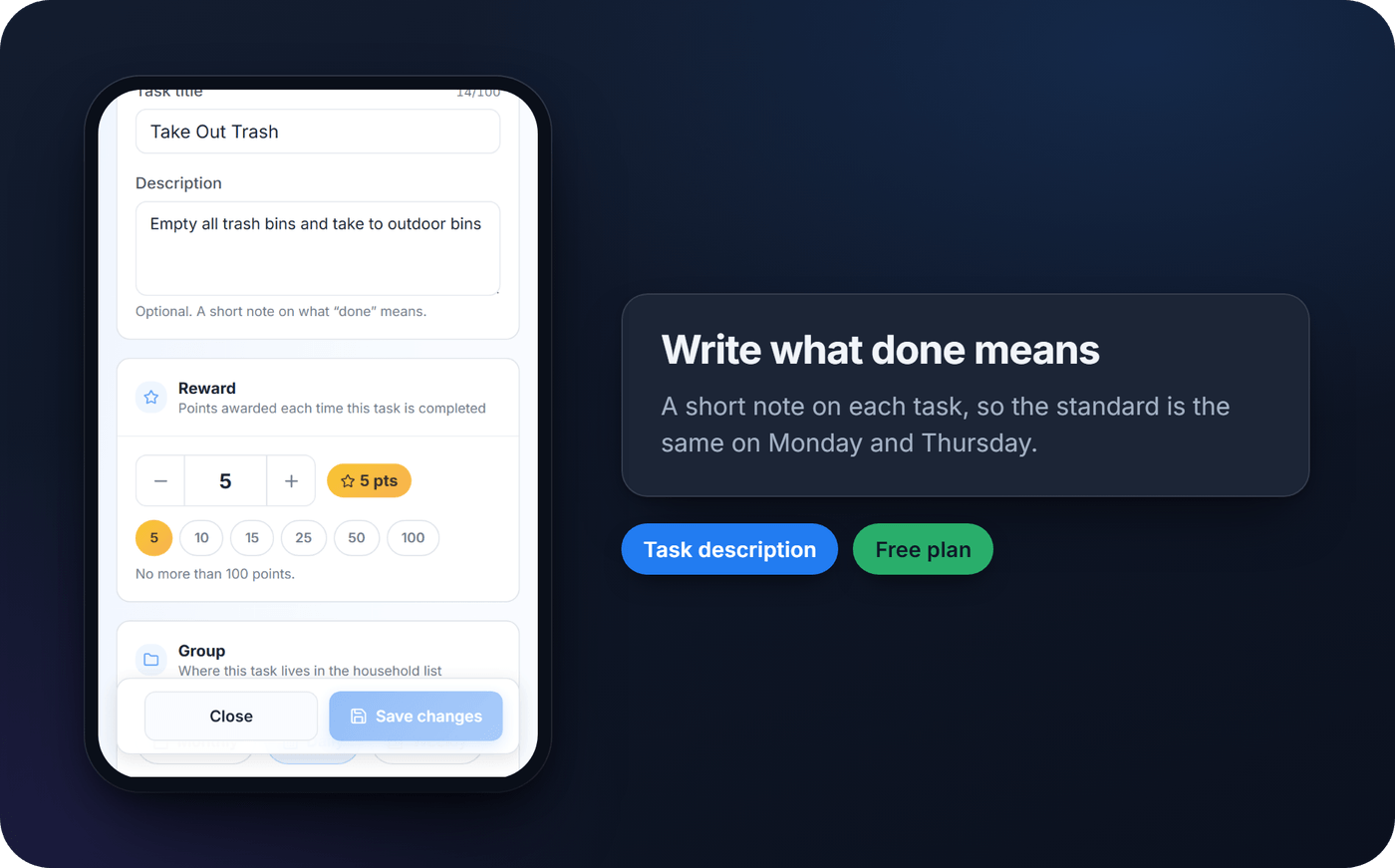
Turn your standard into one short, checkable sentence. "Bathroom: sink wiped, mirror clear, towel on the hook, bin emptied." Avoid words like "properly" or "nicely". A child can't check those.
3. Let them do it alone
Step away. Hovering turns a chore into supervised labour, and they will wait for you to point at the next spot.
4. Check it together
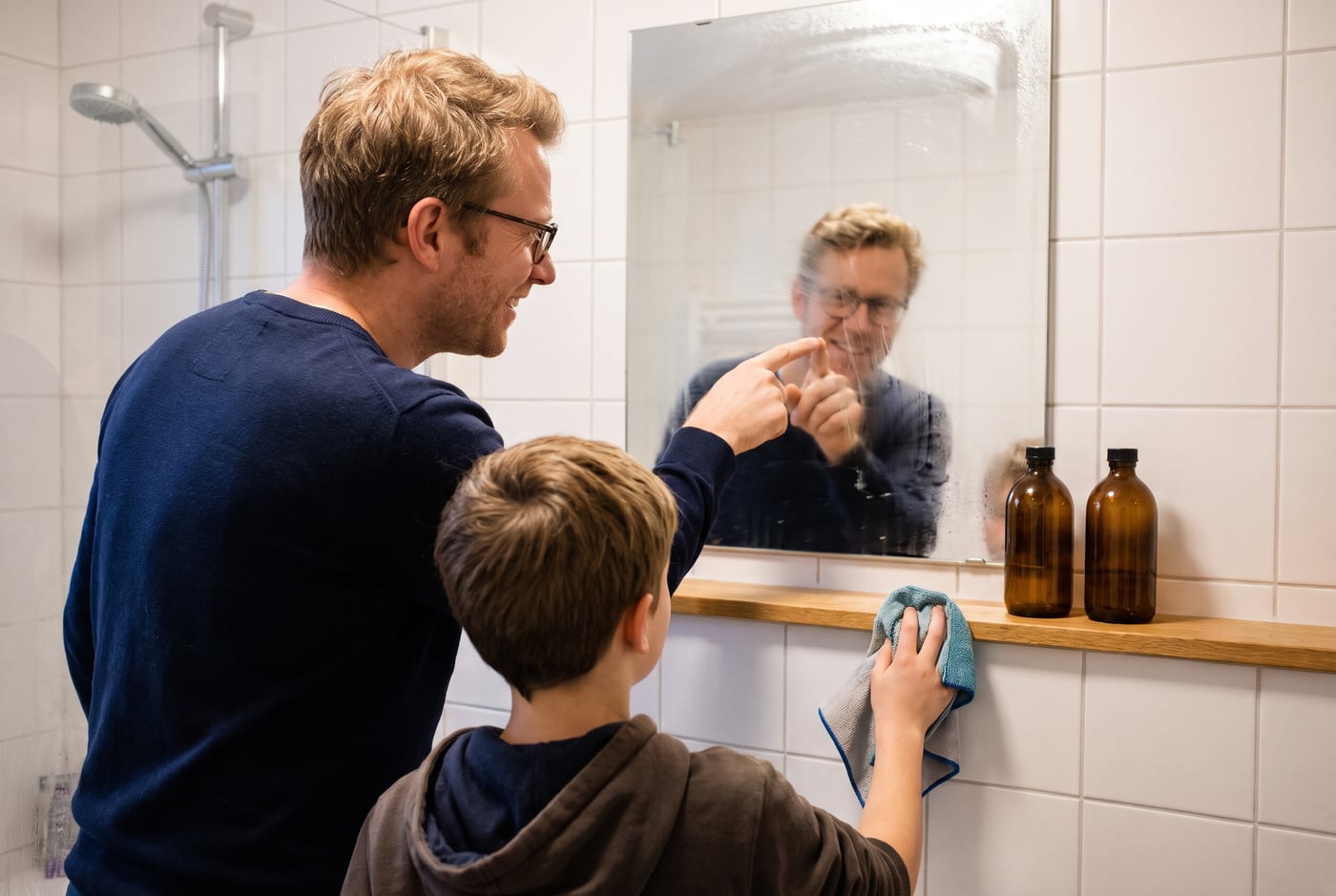
When they say it's done, look at it with them, against the line you wrote. Ask them to show you each part. Most kids spot their own misses this way, and fixing a miss they found feels very different from being told.
5. Approve it, or send it back once
If it meets the line, say so and thank them. CHOP is clear on this part too: thank your child so they know the effort was appreciated. If it doesn't, name the one thing that is missing and let them fix it. Not a speech, one thing. Then it counts.
Make the check part of the system
The routine works best when the check is built in, so it doesn't depend on your mood that day. That is how MatePoints handles it. Each chore is a task, and the task's description is exactly the "what done means" line from step 2. When your child marks a task as done, it doesn't earn points straight away. It lands in Approvals, where you approve it to award the points or reject it with a short reason.
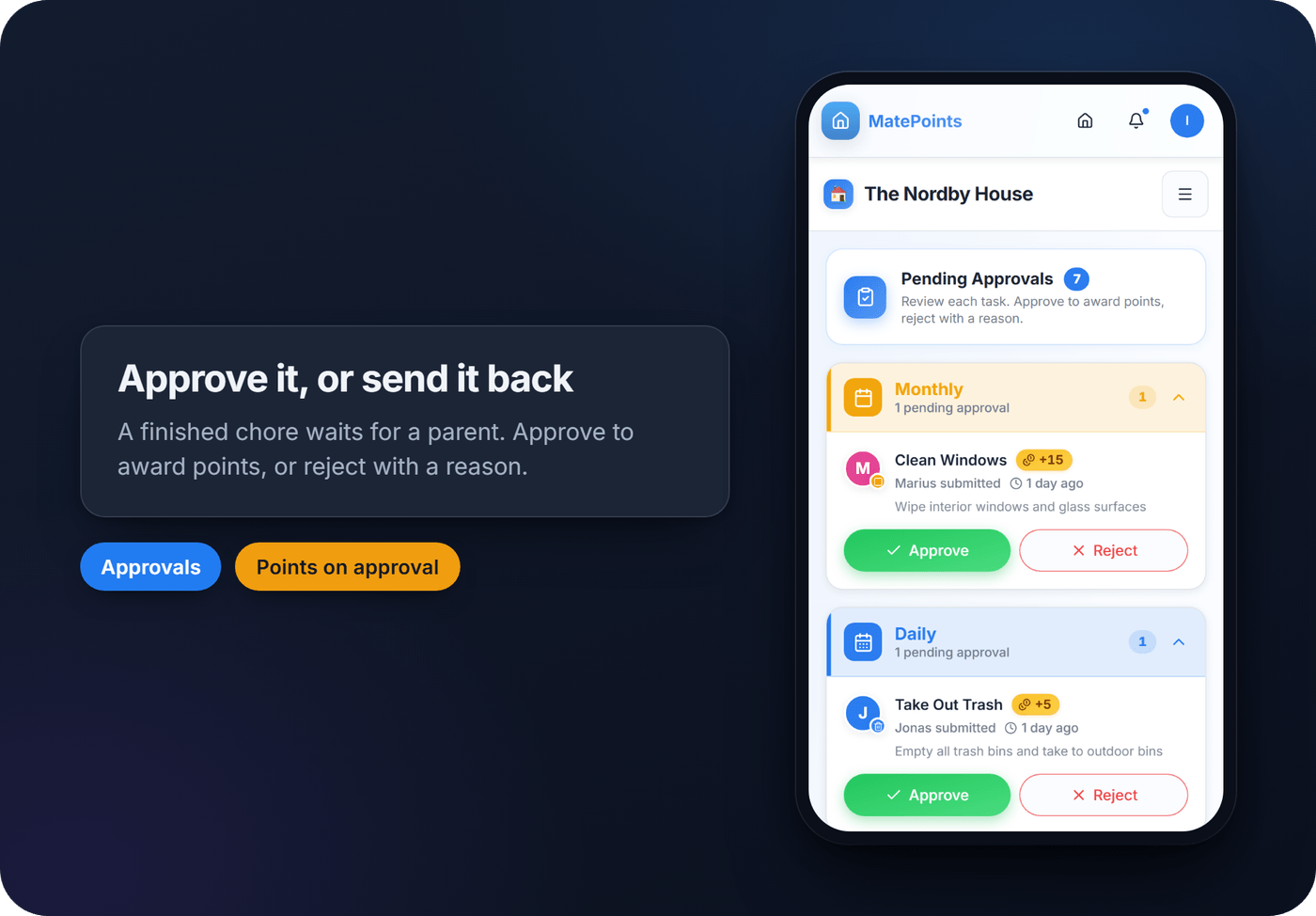
A rejected job shows up for your child with your note, so "towel still on the floor" is waiting for them instead of shouted down the stairs. They fix it and mark it done again once the household's task cooldown has passed (you choose how long that is, down to a minute), and you approve it. The check stops being a confrontation and becomes a normal step, the same every time.
It also keeps your standard steady. The line you wrote on Monday is the same on Thursday, whoever is checking.
Keep your expectations fair
A clear standard only helps if it fits the child. A six-year-old's clean sink is not a teenager's. For a guide to what each age can handle, read age-appropriate chores. For keeping the mood positive while you check, positive reinforcement at home is a good companion, and chore completion tracking covers why a record of what got done matters.
Start with one chore this week. Show them once, write the line, and check it together. If you want the check built in, MatePoints is free to start.