Your housework is worth about $70 a day, says the GAO
The GAO puts the value of unpaid housework at about $70 a day. What that number measures, and three ways to make the work in your home visible.

The US government has put a price on the work nobody pays for. In September 2026 the Government Accountability Office estimated the value of unpaid housework and caregiving at around $70 a day for the average person, and trillions of dollars across the country. That number is useful, but not in the way the headlines suggest. Nobody is owed it. What it does is show how much work happens in a home without anyone seeing it. This guide explains what the GAO measured, what the figure does and does not mean, and three ways to make the work in your own home visible and fairly shared.
What the GAO measured
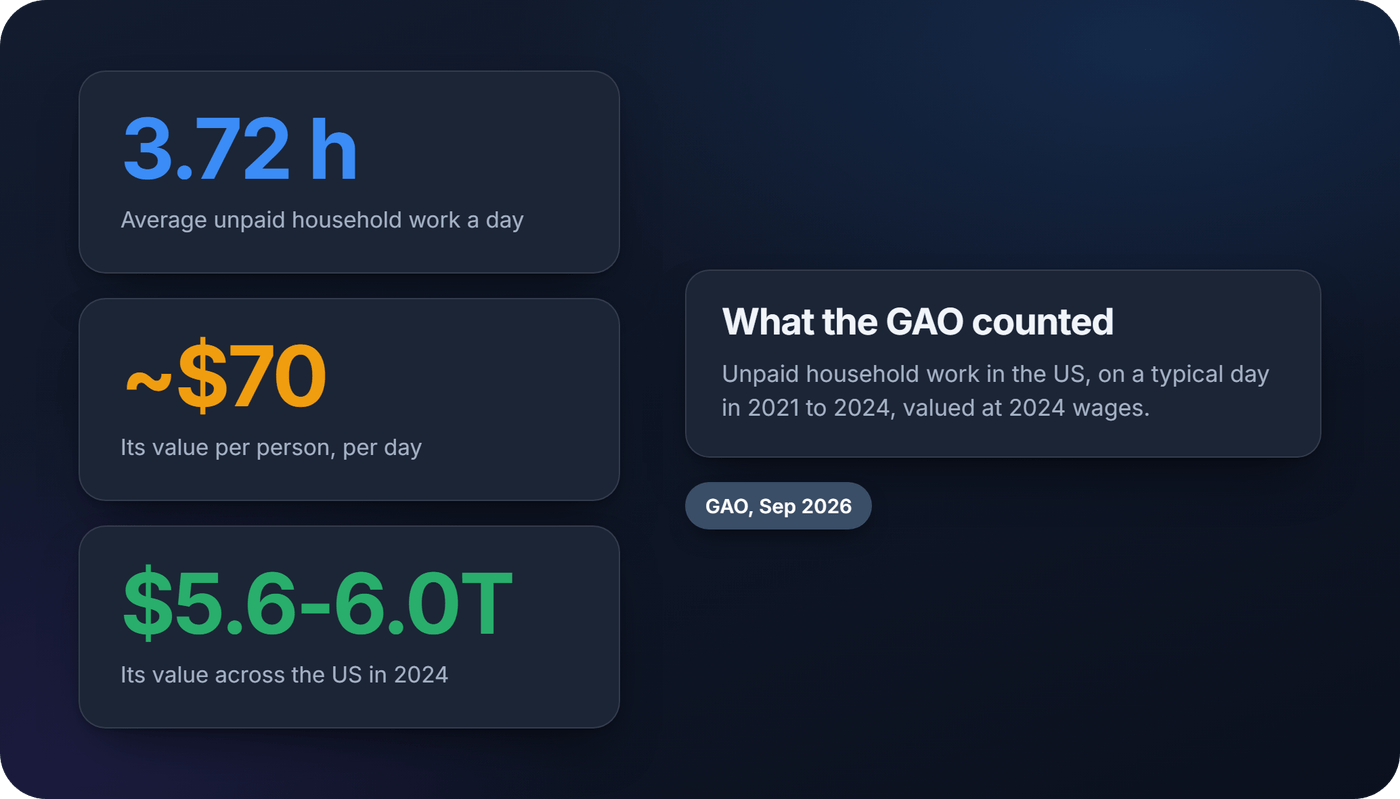
The report, GAO-26-107871, released on 17 September 2026, looked at nationally representative American Time Use Survey data from 2021 to 2024. Its findings:
- On a typical day, 87.3 percent of people did at least some unpaid household work.
- They spent an average of about 3.72 hours on it.
- That time was "valued at around $70 per day".
- Across the US, the work was worth "at least $5.6 to 6.0 trillion in 2024", equal to 19.2 to 20.2 percent of that year's GDP.
The GAO's own blog put it in plainer terms: the hours add up to "nearly a quarter of our waking hours" spent looking after homes and loved ones.
What the $70 does and does not mean
The method is simple to state. The GAO took the hours people reported in the survey and multiplied them by median hourly wages from the 2024 Current Population Survey. For most kinds of work it used both a lower and a higher wage, which is why the national total is a range rather than one number.
Three things follow from that.
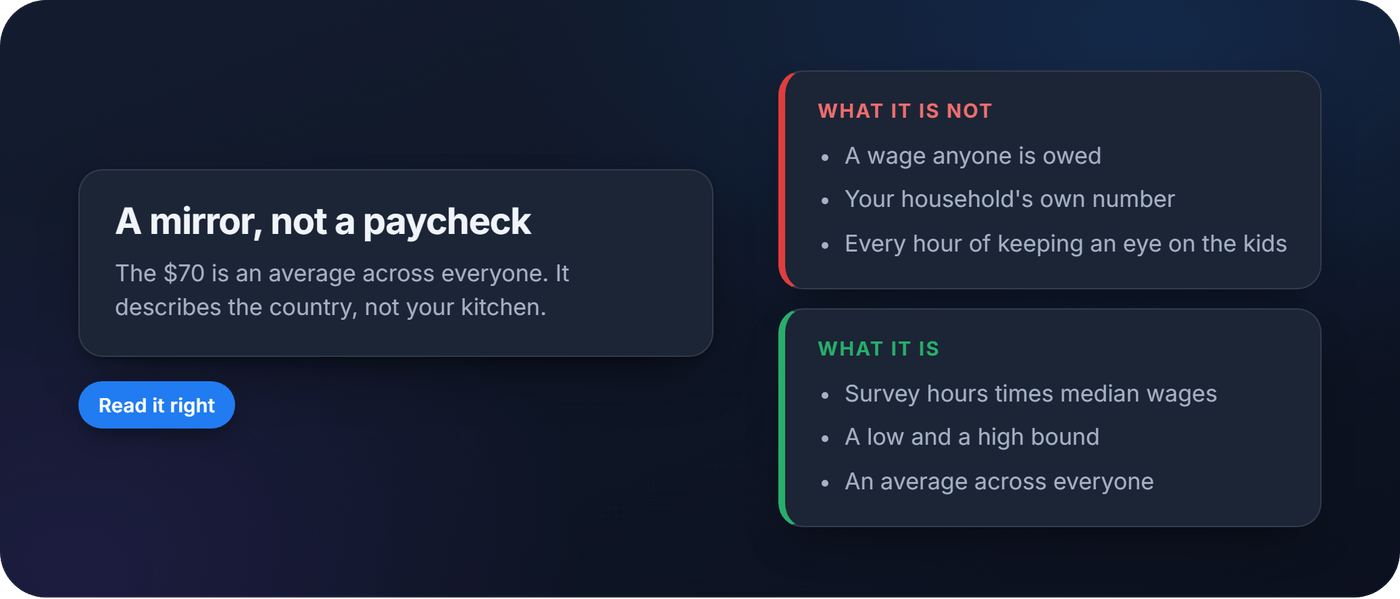
It is an average across everyone. Some people do far more than the average and some far less. The figure describes the country. It does not describe your kitchen, and it is not a wage anyone is owed.
It leaves things out. Caregiving was counted only when it was the main thing someone was doing, not "just keeping an eye on the kids while doing something else", as the GAO blog puts it. Straight Arrow News reported that the total rises to more than $7 trillion when that secondary childcare is included. In the same piece, Kathleen Gerson, a sociology professor at New York University, pointed out that "It doesn't take account of the opportunity costs": the career and earnings people give up to do this work.
It changes nothing on its own. Economist Nancy Folbre told the same outlet, "The report has no real implications for the economy itself, but it improves our understanding of what's going on." That is the right way to read it. The figure is a mirror, not a paycheck.
Why unpaid work stays invisible at home
Paid work comes with a record: a timesheet, a payslip, a job title. Housework comes with none of those. A clean bathroom looks the same whether it took ten minutes or an hour, and nobody notices the bins until they are full.
That makes the work easy to underestimate, both for the person doing it and for everyone else. It is also not shared evenly. The GAO found women made up about 53.9 percent of the people doing this work, against 51.2 percent of the population. If you want the full picture of who does what, see who does more housework, and for the planning and remembering that sits behind every chore, read how to share the mental load.
The fix does not start with an argument about who does more. It starts with making the work visible, so you are both looking at the same thing.
Three ways to make the work in your home visible
1. List every job
Sit down for twenty minutes and write every recurring job in your home. Not just the obvious ones. Include the jobs that only get noticed when they are missed: restocking toilet roll, booking the dentist, cleaning the fridge, paying the bills, feeding the pets.
A full list usually surprises someone. It turns "I do loads around here" into something both of you can read. If you have never split the jobs properly, dividing household chores walks through an audit first and a split second.
2. Put a size on each job
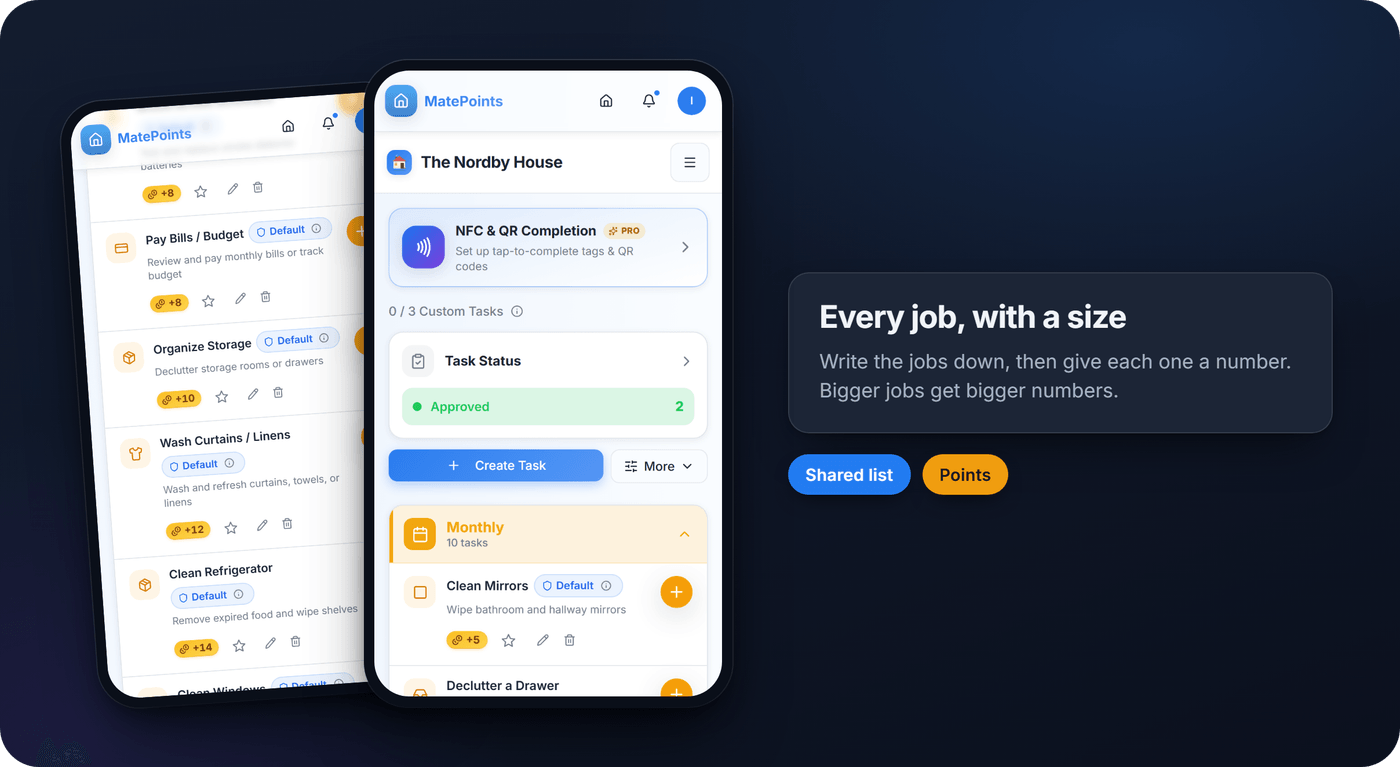
A list on its own treats emptying the dishwasher and deep-cleaning the oven as equal. They are not. Give every job a size, either in rough minutes or in points where a bigger job gets a bigger number.
The exact numbers matter less than agreeing on them together. The point is that an hour-long job and a five-minute job no longer count the same, which is exactly the problem the GAO was solving when it priced hours instead of counting tasks.
3. Look at the week together
Once jobs have a size, you can add them up. Pick a day, the same one every week, and spend ten minutes looking at what got done and by whom. Not to score points off each other. To see whether the split you agreed is the split you actually have.
This is where a record beats memory. Small jobs are the first to be forgotten, and they are most of the list.
If your household uses MatePoints, the Leaderboard tab does the adding up. Each completed job earns the points you gave it once it is approved, and the board shows every member's total for today, this week or this month. The week resets on Monday, so your weekly look always starts from a clean slate. The Leaderboard is part of the free plan.
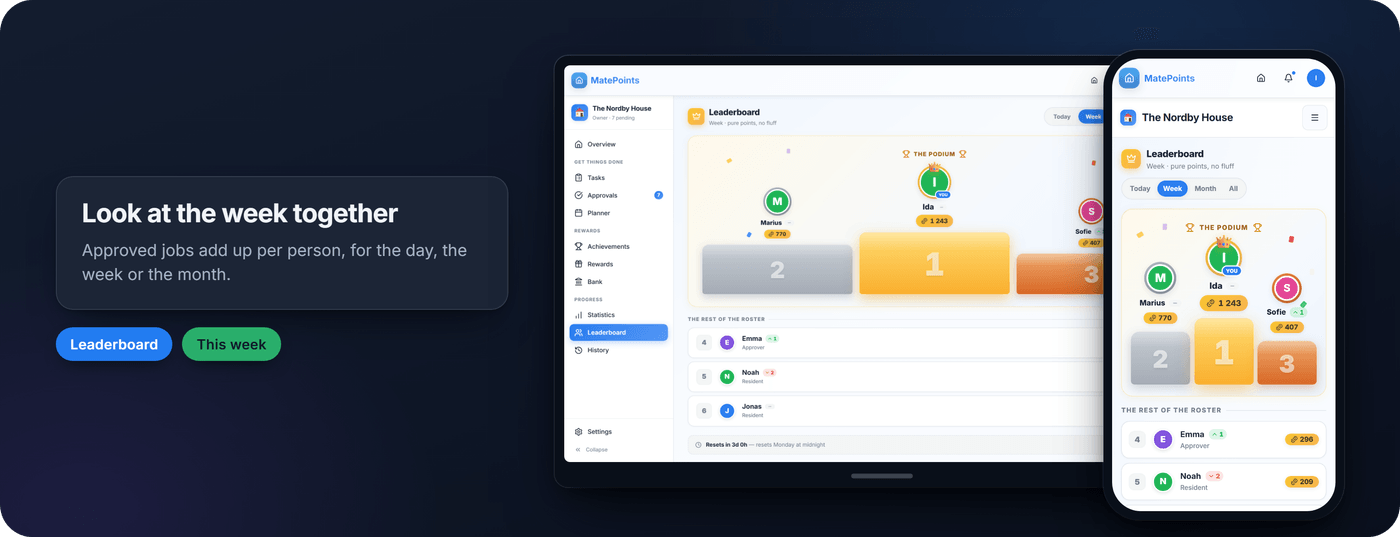
If the totals feel wrong, move one job, not five. Look again next week.

Points are not wages
One caution. Putting a number on a chore is not the same as paying for it, and it should not turn your home into a contract. The points are there so you can see the work, the same way the GAO's dollars are there so a country can see it. If you want to use them as an actual incentive between adults, try it as a short experiment first, as described in chore incentives for adults.
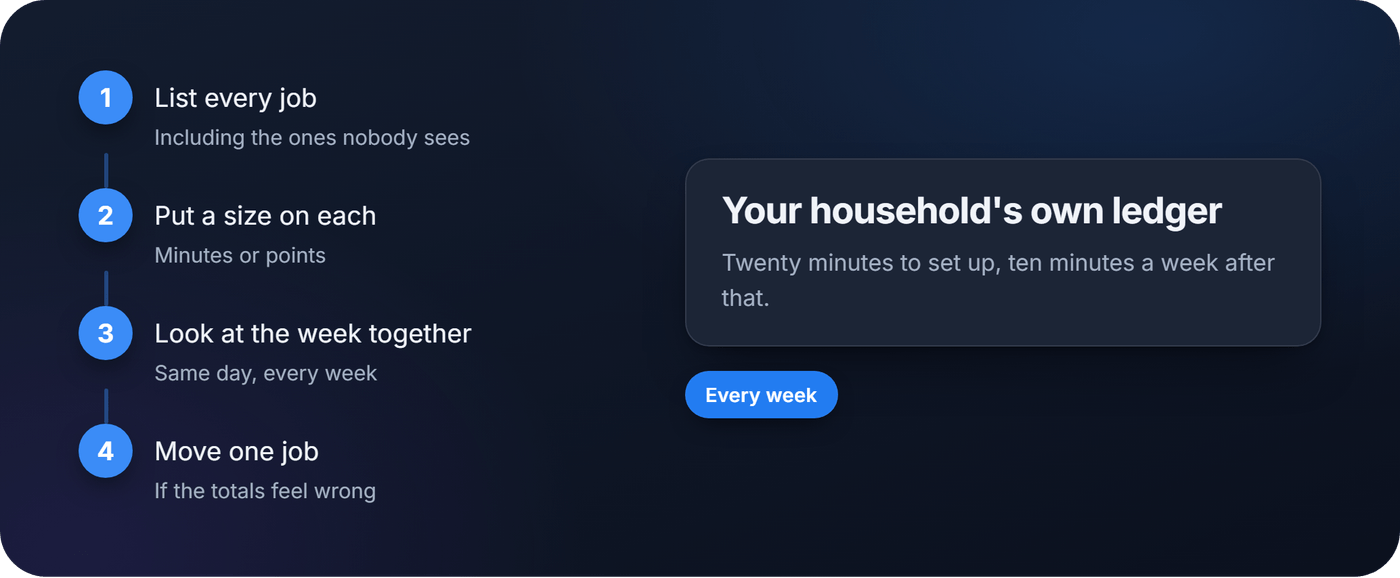
Start your household's own ledger
The GAO's figure tells you that almost four hours a day of real work happens in homes without a record. You cannot change the national number. You can make your household's share of it visible: list the jobs, size them, and look at the week together.
If you would like the adding up done for you, MatePoints is free to start. Set up your household, give each job its points, and check the Leaderboard together at the end of the week.
Sources
- Unpaid Household Work: Estimated Value and Time Spent on Domestic Tasks and Caregiving (GAO-26-107871), U.S. Government Accountability Office, September 2026
- The Value of Caregiving and Domestic Work We Do Every Day, GAO WatchBlog, September 2026
- The unpaid Americans' work powering a $5.6 trillion 'economy', Dan Levin, Straight Arrow News, September 2026