Chore games that actually get played
Six chore games you can run with a kitchen timer, the order that makes them stick, and the point where gamified chores need an app instead.

Gamified chores work, and you can test that this afternoon without installing anything. Pick the one chore you nag about most. Say out loud what finished looks like. Set a timer. That is the whole mechanism, and everything below is a variation on it.
Why gamified chores work when nagging does not
A chore feels like a wall when it is vague. "Clean your room" is a category, and a category has no obvious first move. "Put the books on the shelf, then the clothes in the hamper" is a doorway.
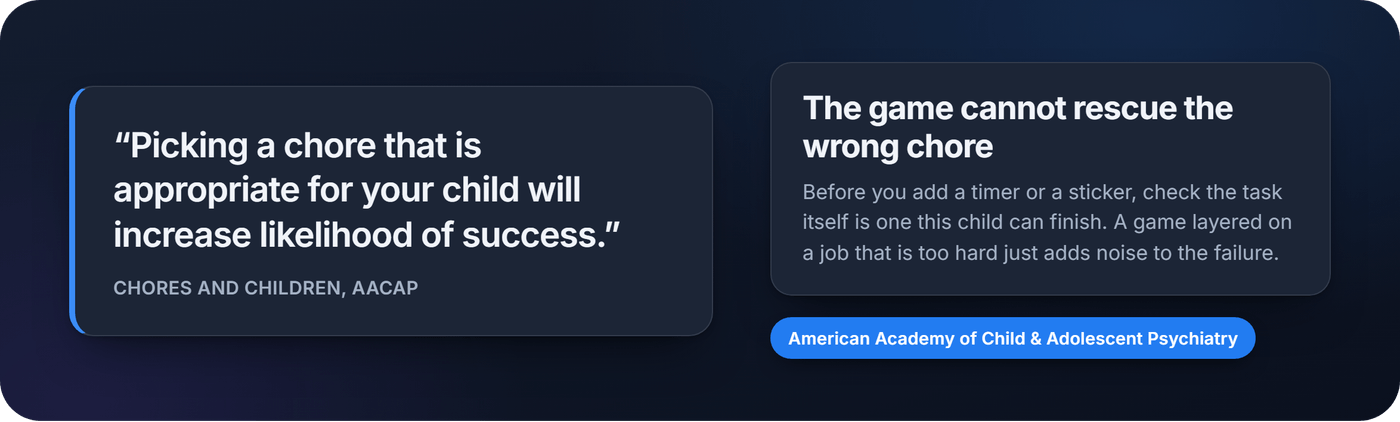
The American Academy of Child & Adolescent Psychiatry makes the same point about the task itself before any game goes near it: picking a chore that suits your child raises the odds it gets done, and their advice on the reward is to join in a child's pride rather than inspect the result. Effort over perfection.
The game adds the second half: feedback fast enough to connect the doing with the finishing. A checkmark, a beaten timer, a point landing the second the job is logged. Delayed gratification is a skill some children have not built yet, and a good game does not ask them to.
That is the whole trick to making household chores engaging to a child who finds them tedious, and it costs nothing. The feedback has to arrive while the effort is still in the room.
One warning before the fun starts. Do not build the whole thing on cash. In a 1973 experiment, children who were promised a reward for an activity later showed less interest in it than children who were not, while children given the same reward as an unannounced surprise showed no such drop. Praise, autonomy and visible progress age better than a pound coin, and they do not get more expensive every year.
Six games for household tasks you can start today
Every one of these runs on something already in your kitchen drawer.
- Beat the clock. Set a timer to a length that suits the age: five minutes for a six year old picking up toys, fifteen for a teenager clearing the kitchen. Announce it before you start, not after.
- One song, one job. Build a playlist where a track equals a task. When the song ends, so does that chore. Finish early and the rest of the track is dancing.
- Chore bingo. A five by five grid with a task in each square. Five in a row earns something small. This is the one that survives longest with readers who like a board.
- Scavenger hunt. Hide nothing. Just name the target: ten stray socks, five misplaced toys, everything on the stairs that does not live there.
- Before and after. Photograph the room, do the job, photograph it again. The pair of pictures does something a tidy room on its own does not, which is show the size of the change.
- Sock basketball. Laundry sorting from three feet back. Nobody has ever needed this explained twice.
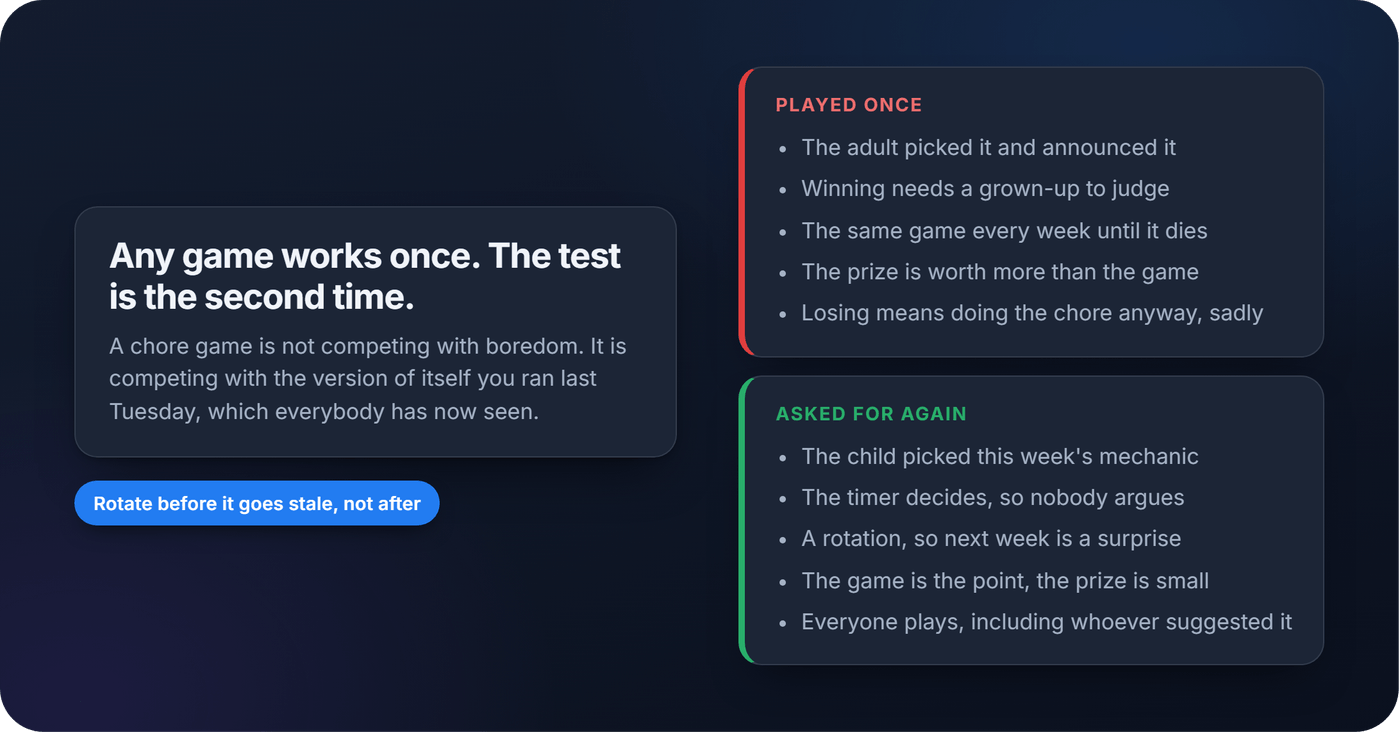
Rotate the mechanic weekly, and let whoever is playing pick it. That single habit is what separates interactive cleaning games that last a term from ones that die in week two, because the thing a game is really competing with is the version of itself you ran last Tuesday. Most of the work in gamifying chores is here, in the rotation, rather than in the first clever idea.
Pro tip: Keep a box of chore tools on the counter: a kitchen timer, a bingo card, a small speaker. Children reach for the game themselves once the kit is within arm's reach, which is the point at which you stop having to start it.
One thing every game on that list has in common, and it is easy to miss. They all work better when an adult plays too. Race the timer in the next room. Take a bingo square. The moment you are competing alongside a child rather than supervising one, the chore stops being something done to them, and the difference in how hard they try is not subtle. It is also the fastest way to find out that fifteen minutes was never a realistic window for the job you picked.
How to gamify chores without buying anything
The order matters more than the game.
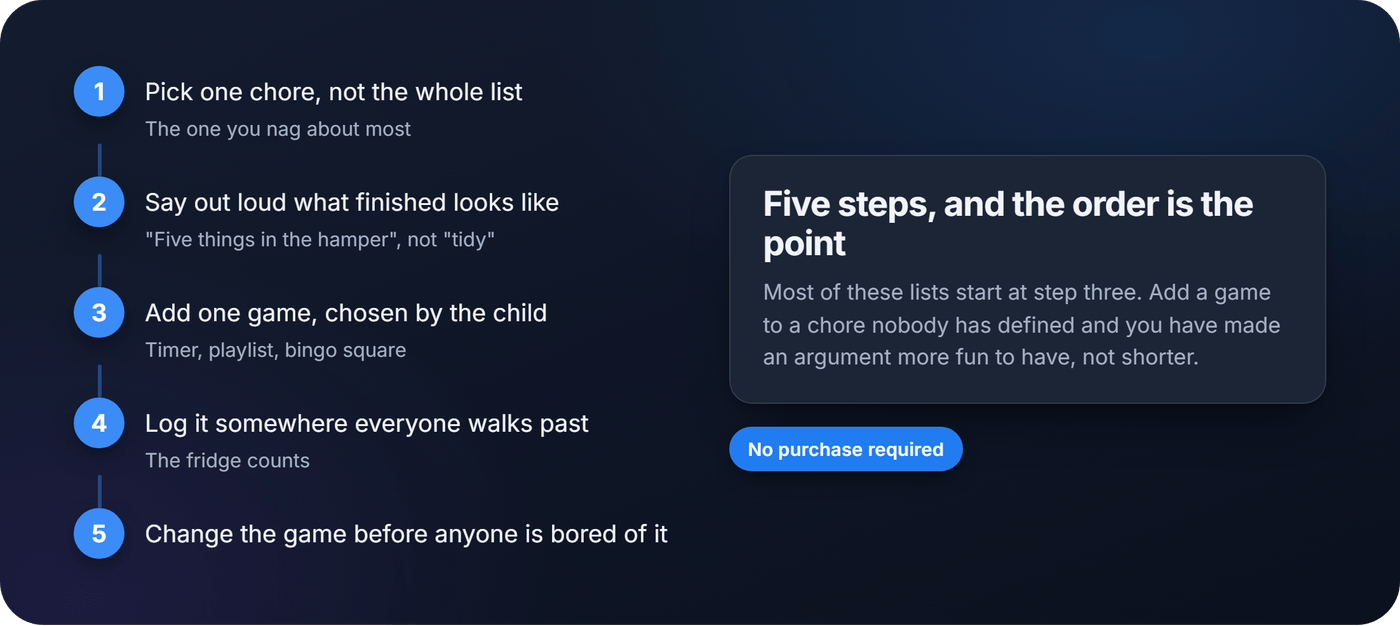
Most "make chores fun" lists start at step three. Add a game to a chore nobody has defined and you have made an argument more enjoyable to have, not shorter. Define done first, in a sentence a seven year old could check against, then decorate it.
Each step is preventing something specific:
- One chore, not the list. Five new games at once is a new system, and a new system is what everybody quietly abandons in week two.
- Say what finished looks like. Otherwise the game ends and the argument starts, which is the exact outcome you were trying to buy your way out of.
- Let them choose the mechanic. A game you imposed is just a chore wearing a hat. This is also the cheapest way to find out that the one you had in mind bores them.
- Log it in the open. A record on the fridge does the remembering, so nobody has to be the person who keeps score out loud.
- Rotate before it goes stale. Change the game while it is still working. A mechanic that has died takes the chore down with it, and rebuilding enthusiasm costs far more than rotating would have.
Fun chores for kids of different ages
The game changes with the child more than the chore does. A three year old needs the reward inside the same minute. A nine year old can chase a bingo row across a week. A teenager mostly needs to be left alone with a deadline they helped set.
That progression, and which chores belong at which stage, is a subject with its own guide. Two things worth adding here, because they are about games specifically rather than chores.
A timer is not neutral. The countdown that makes one child move faster makes another freeze. If speed challenges land badly, the problem is usually the pressure rather than the chore, and a visual countdown or a quiet buzz often works where a loud one does not.
Novelty is not universal either. Rotating the mechanic weekly is the right default, and it is wrong for some households. Where predictability is what makes a routine survive, keep the game stable and flag any change in advance. If that describes your house, the systems side of this goes deeper than a games article can.
When chore gamification needs an app
Paper wins for longer than most app makers admit. A kitchen timer and a fridge chart handle one or two children and one adult indefinitely, and if a sticker chart cannot hold a household's attention for three weeks, no software will.
The switch earns itself in three situations.
More than one child keeping score. Games handle the starting. Comparing is where a bigger household spends its arguing, and that needs a number both children can check.
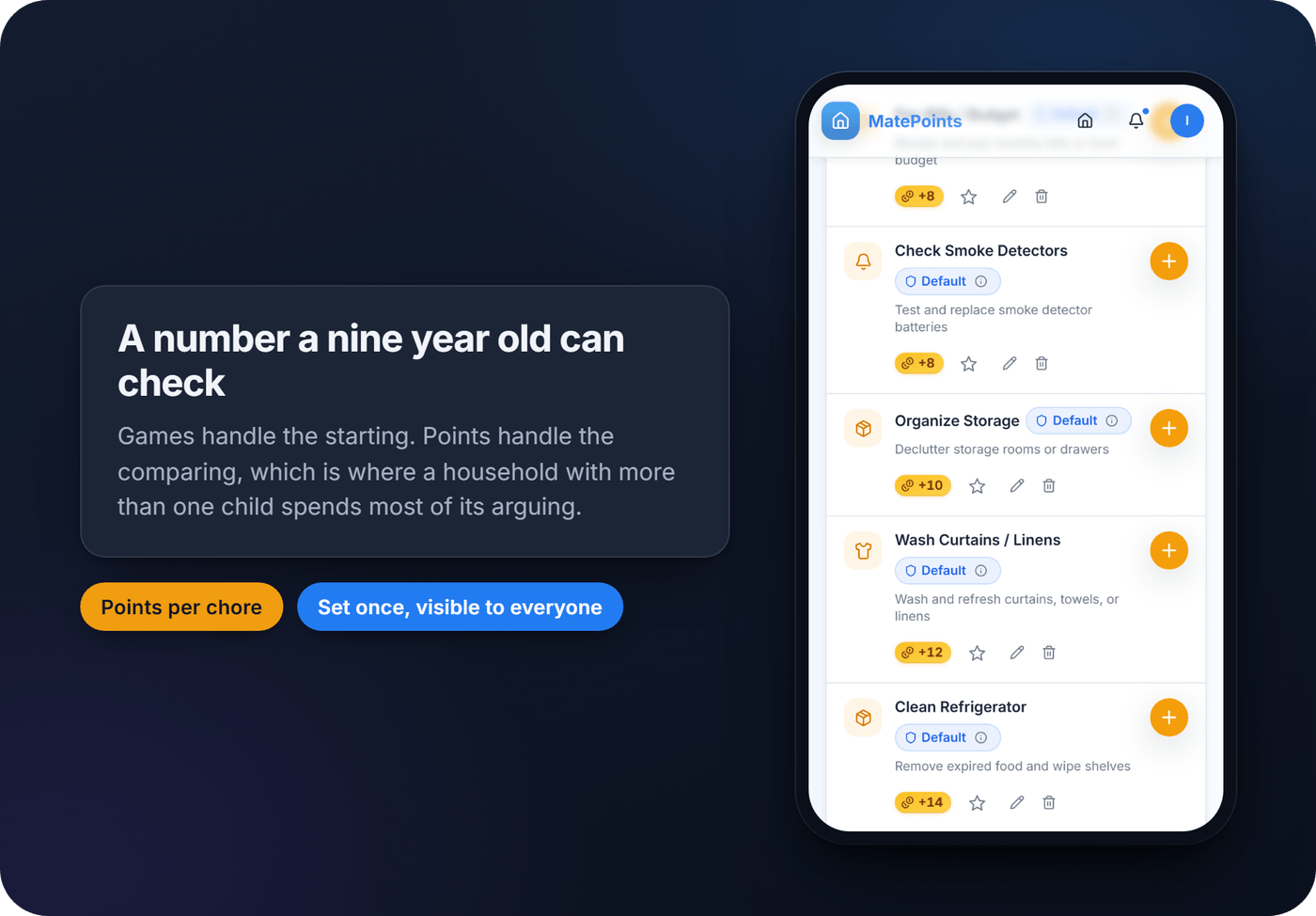
Task reward systems only work when the values differ by effort. If everything is worth the same, the number stops carrying information and the two minute job starts competing with the twenty minute one.
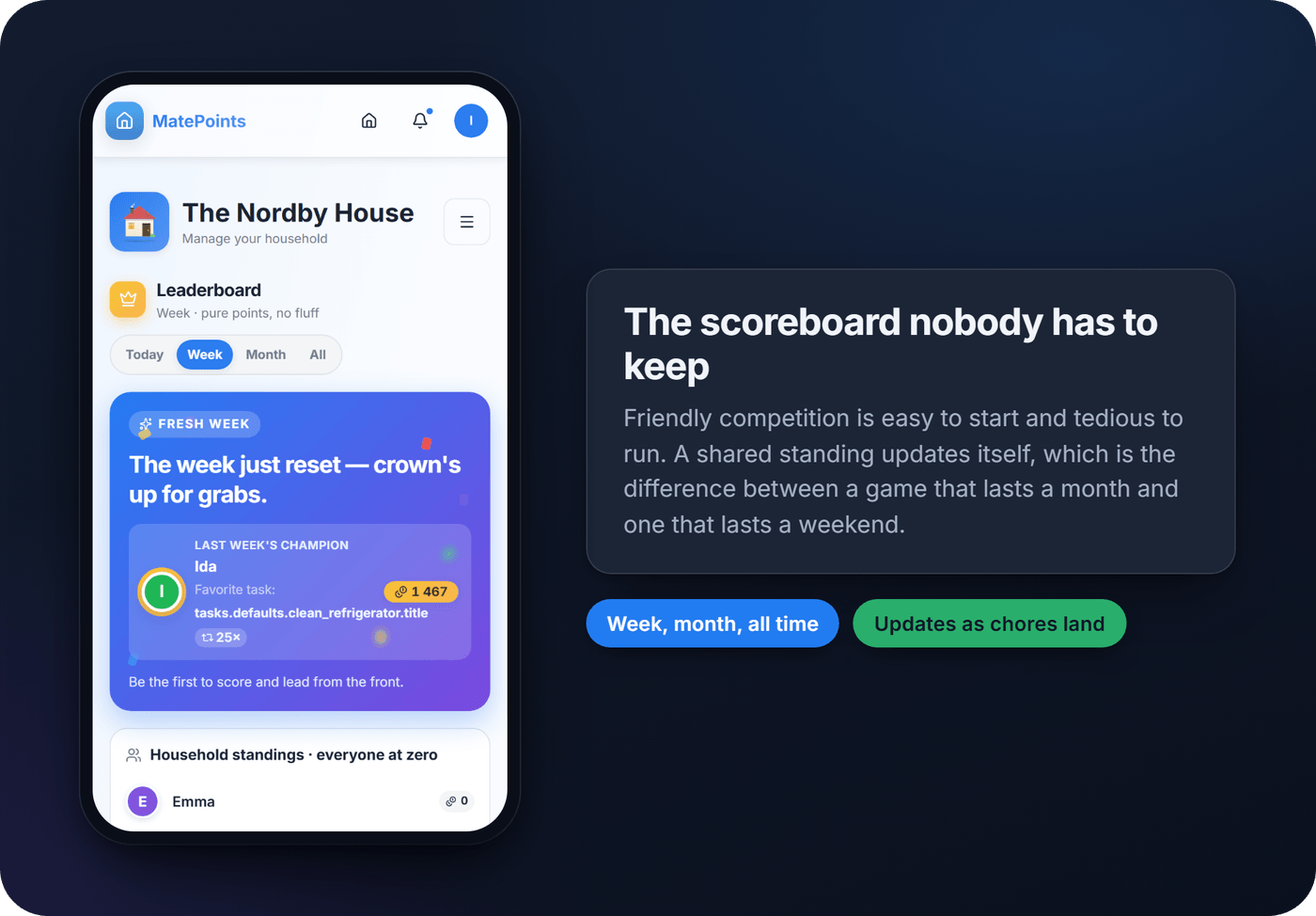
Competition you are tired of refereeing. A live standing is easy to start and tedious to maintain by hand on a Sunday night.
Arguments about whether it happened. This is the one paper genuinely cannot solve.
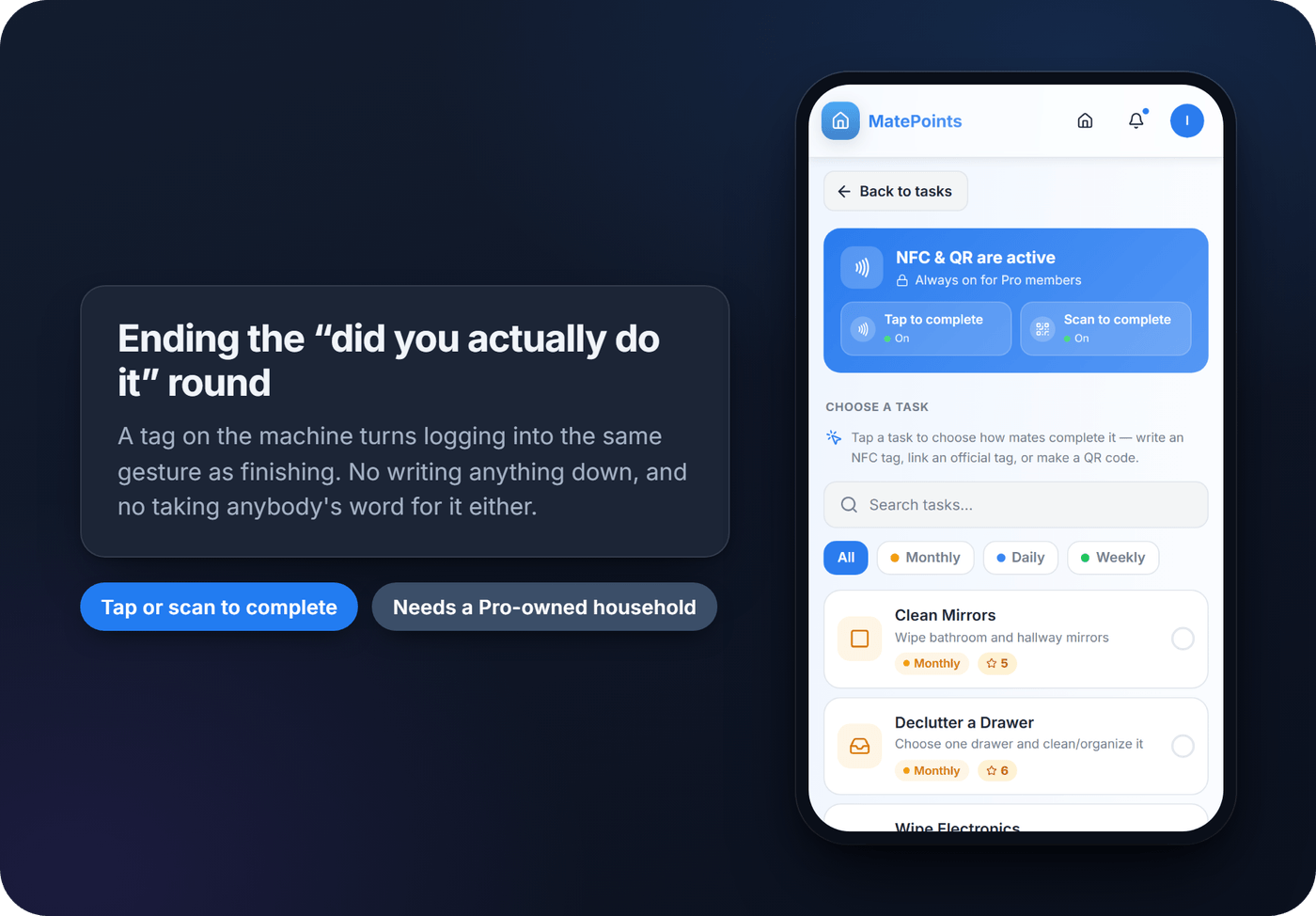
A tag on the washing machine makes logging the same gesture as finishing. Nobody writes anything down and nobody takes anybody's word for it. In MatePoints this tap or scan to complete needs a household owned by a Pro member, and after that anyone in the house can tap, Pro or not.
Two more things worth knowing before you compare motivational cleaning apps. Achievements that pay out an agreed reward count approved completions of a chore rather than streaks, and they need Pro. Running more than one household, which is what a blended family across two homes actually needs, is Pro as well.
The honest take
Most advice on this topic oversells the reward mechanics and undersells the setup. Stickers, points and leaderboards do not fix a chore that was never broken into steps. The households that succeed are not the ones with the best app. They are the ones who spent ten minutes deciding what "clean" means for each task before adding anything on top.
Where I would push back hardest: do not adopt an app before you have proved the mechanics with paper and a kitchen timer. If a sticker chart holds attention for three weeks, you are ready for something that tracks itself. If it does not, an app will not fix a problem the simpler system already could not.